A Complete Lower Body Strength and Hypertrophy Workout
July 23, 2026
A good lower-body session needs more than random squats and leg machines. You need enough heavy work to build strength, enough targeted volume to grow muscle, and a progression plan you can repeat.
This workout trains the quads, hamstrings, glutes, calves, and abs without turning every exercise into an exhausting test of survival.
The workout at a glance
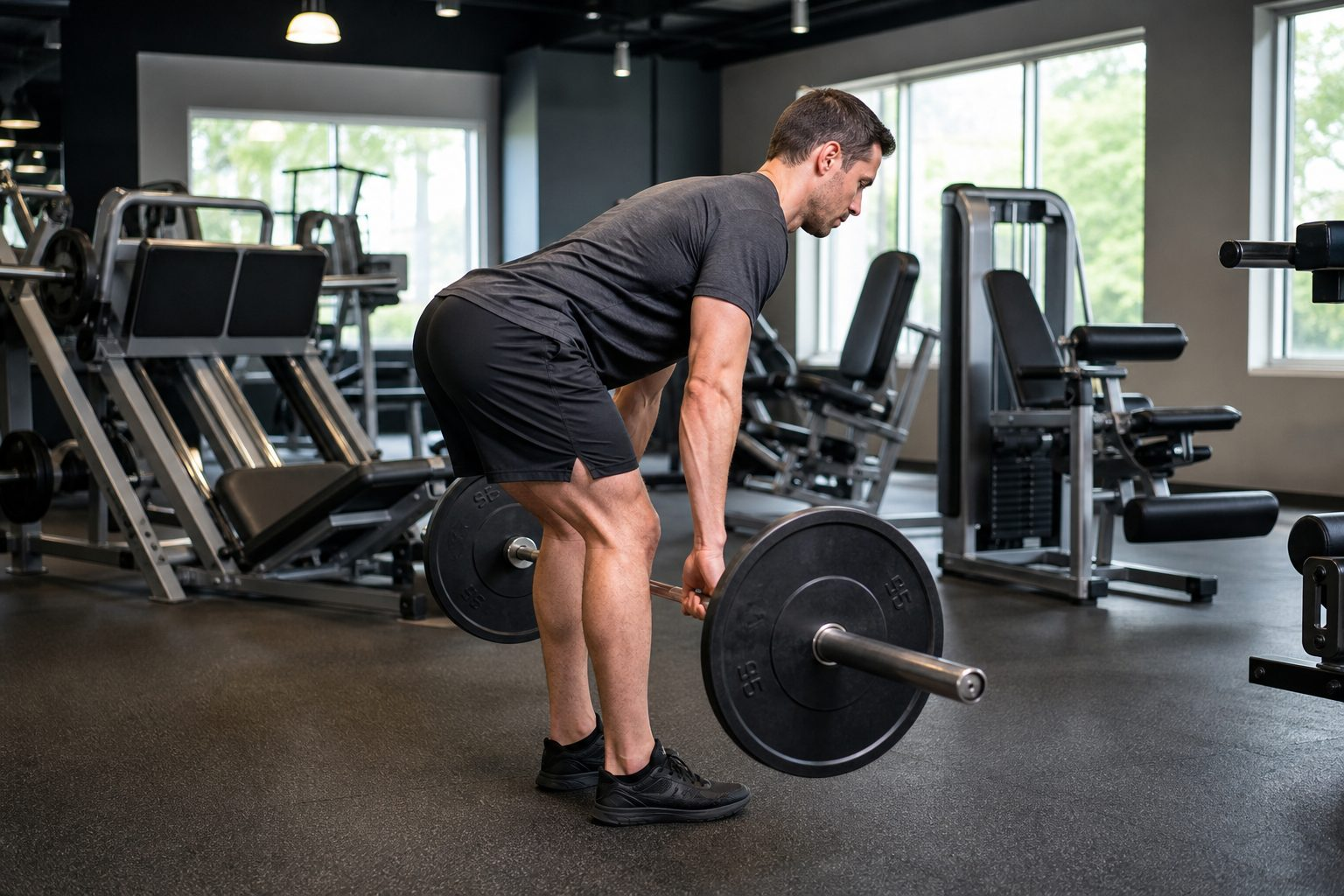
The session begins with one heavy compound lift while you are fresh. It then moves into moderate-rep posterior-chain work, higher-volume quad training, targeted hamstring and knee-extension work, calves, and abs.
Use the following sets and reps:
| Exercise | Working sets | Reps | Rest |
|---|---|---|---|
| Conventional Deadlift | 1 | 5 | 3–5 minutes |
| Romanian Deadlift | 2 | 8 | 2–3 minutes |
| 45 Degree Machine Leg Press | 4 | 10–12 | Up to 2 minutes |
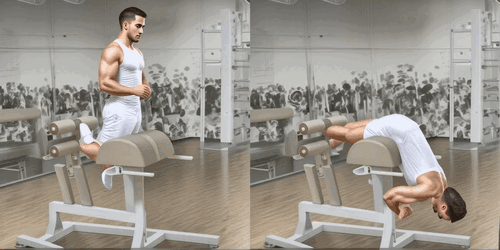
| Glute-Ham Raise Machine | 3 | 8–10 | 2 minutes |
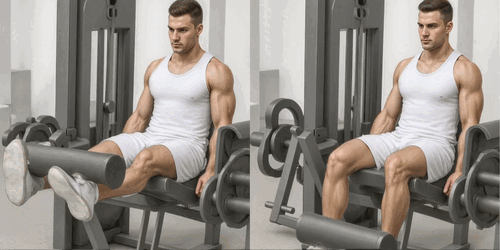
| Machine Leg Extensions | 3 | 8–10 | 60–90 seconds |
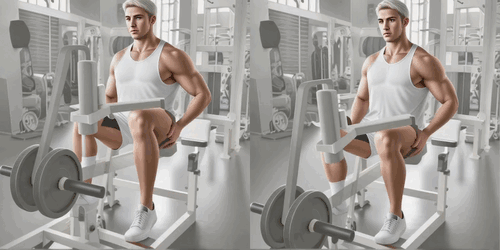
| Machine Seated Calf Raise | 4 | 15–20 | 60–90 seconds |
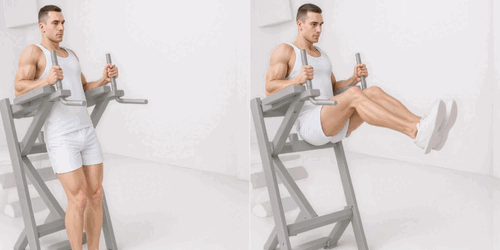
| Captain’s Chair Leg Raises | 3 | 10–20 | 60–90 seconds |
Warm-up sets do not count toward these totals.
Start with a short, specific warm-up
Spend five to ten minutes walking on an incline or using another low-intensity cardio option. The goal is to raise your body temperature, not create fatigue before the workout starts.
Follow that with a few dynamic movements for the hips, knees, and ankles. Bodyweight squats, controlled lunges, hip hinges, and ankle rocks are enough for most people.
Then perform several deadlift warm-up sets. Add weight gradually while reducing the reps:
- Empty bar or very light load for 8–10 reps
- Around 40% of your working weight for 5 reps
- Around 60% for 3–5 reps
- Around 75% for 2–3 reps
- Around 85% for 1 rep
- Working set for 5 reps
These percentages are only a guide. Warm up enough to feel prepared, but do not turn the pyramid into extra working volume.
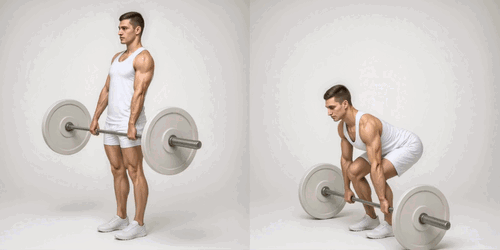
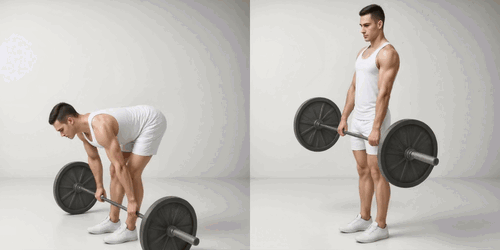
1. Use the deadlift as focused strength work
Perform one hard set of five reps at roughly RPE 8–9. That means finishing with one or two technically sound reps still available.
One top set may sound too easy on paper. It is not if the load is challenging and the technique is consistent. The low volume lets you practice heavy lifting without destroying your performance on the rest of the session.
Do not chase a grinder. If your back position changes, the bar drifts away, or the fifth rep takes several seconds longer than the first, the weight is probably too heavy.
If conventional deadlifts do not suit you, reasonable alternatives include:
- Trap bar deadlifts for a more upright position
- Barbell hip thrusts for greater glute emphasis
- Bulgarian split squats for more unilateral quad and glute work
Choose one variation and track it consistently. Constantly changing the main lift makes progression difficult to judge.
2. Follow with controlled Romanian deadlifts
Reduce the load substantially and perform two sets of eight Romanian deadlifts. Starting around 50–60% of your deadlift top-set weight is reasonable, but technique should determine the final load.
Push your hips backward while keeping the bar close to your legs. Maintain a small, stable bend in your knees. Lower only as far as you can without losing your spinal position or turning the movement into a squat.
You should feel tension building through the hamstrings. You do not need to touch the floor.
Because this movement follows heavy deadlifts, stop with approximately two reps in reserve. The goal is productive hamstring and glute volume, not complete fatigue.
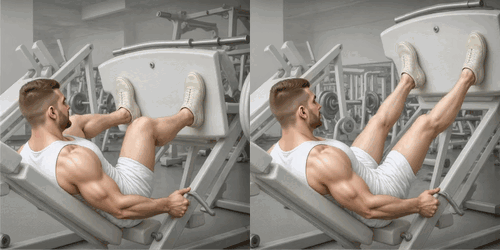
3. Accumulate quad volume on the leg press
Perform four sets of 10–12 reps with a medium stance. Lower the platform as deeply as your mobility allows without your pelvis rolling away from the pad.
Keep the reps smooth. A slight knee bend at the top can help maintain tension, but there is no need to obsess over avoiding lockout. Depth, control, and repeatable technique matter more.
Rest for up to two minutes. Longer rest may allow another rep or two, but it can also make the session unnecessarily long. Two minutes is a useful compromise between performance and training pace.
Once you can complete 12 clean reps on all four sets, add a small amount of weight.
4. Train knee-flexion strength directly
The glute-ham raise trains the hamstrings differently from a hip hinge. Your knees flex while you resist the movement, making it a useful complement to deadlifts.
Use assistance if you cannot control the lowering phase. If necessary, reduce the difficulty with a counterbalance or use your hands lightly at the bottom.
Avoid relaxing completely at the top. Keep the reps controlled and work within the range where your hamstrings remain loaded.
A Nordic hamstring curl is a suitable alternative when a dedicated machine is unavailable. Focus on controlling the negative and use assistance to return to the starting position.
5. Use slow leg extensions for targeted quad work
Compound leg exercises train the quads well, but leg extensions provide direct knee-extension work and challenge the rectus femoris more effectively than many squat and press variations.
Use a three-second lowering phase on every rep:
- Extend the knees under control.
- Briefly squeeze at the top.
- Lower the weight for three full seconds.
- Begin the next rep without bouncing.
The slower eccentric forces you to use a lighter load. That is useful here. Heavy stacks and fast reps are not automatically better for growth, especially when they irritate your knees.
6. Train calves through a full range
Perform four sets of 15–20 seated calf raises. Pause briefly in the stretched position, rise as high as you can, and avoid bouncing.
Higher reps are not inherently superior for calves. They are used here to provide variety after the heavier work earlier in the session.
A bent-knee calf raise places more emphasis on the soleus, while a straight-knee variation involves the gastrocnemius more strongly. If you train legs twice per week, use seated calf raises in one session and a standing variation in the other.
7. Finish with controlled leg raises
Perform 10–20 reps per set and stop when you can no longer raise your knees or legs without swinging.
Think about curling your pelvis toward your ribs rather than simply lifting your thighs. That small change makes the exercise more focused on the abs and less dependent on the hip flexors.
Use bent knees if you cannot reach ten controlled reps. Progress toward straighter legs over time. If 20 reps are easy, use a two- to three-second lowering phase before adding external resistance.
How to progress the workout
For most exercises, use double progression:
- Keep the weight the same until you reach the top of the rep range on every set.
- Add the smallest practical amount of weight.
- Return to the lower end of the range.
- Build the reps back up.
For the deadlift, you can keep the target at five reps and add weight only when the set remains technically clean. Lifters prioritizing strength can gradually reduce reps while increasing load, but frequent maximal singles are unnecessary for most beginner-to-intermediate lifters.
Record more than the weight. Reps, technique, range of motion, and effort all matter. Completing the same load with cleaner reps is still progress.
Common mistakes to avoid
- Taking the deadlift to complete failure: This creates fatigue that reduces the quality of the remaining workout.
- Using too much weight on Romanian deadlifts: If your range shortens or your back position changes, the load is too heavy.
- Cutting leg press depth: More plates do not compensate for shallow, inconsistent reps.
- Rushing leg extensions: The controlled eccentric is the point of this variation.
- Bouncing calf raises: Use the stretched position instead of relying on momentum.
- Swinging through leg raises: End the set when your abs can no longer control the movement.
- Adding volume every week: More work only helps when you can recover and progress from it.
How Gymfile helps
This workout only works long term if you remember what you did and know what to improve next time.
Gymfile lets you track sets, reps, weights, rest times, and previous performance in one place. That makes it easier to apply double progression, control your training volume, and avoid guessing whether you actually improved.
Summary
Start with one challenging but controlled deadlift set. Follow it with moderate Romanian deadlift volume, then build the bulk of the session around leg presses and targeted hamstring work.
Finish with slow leg extensions, full-range calf raises, and controlled abdominal training. Keep the routine stable, record every working set, and increase the load only when your reps and technique justify it.