Best Glute Exercises for Muscle Growth
August 30, 2026
If you want bigger glutes, random activation drills are not enough. You need exercises that create high muscular tension, train useful ranges of motion, and can be progressed over time.
The best approach combines heavy hip extension, deep hip flexion, and direct hip abduction rather than relying on one supposedly perfect movement.
The simple answer
For most lifters, these are the strongest glute-building options:
- Walking lunges: excellent overall stimulus through a long range of motion.
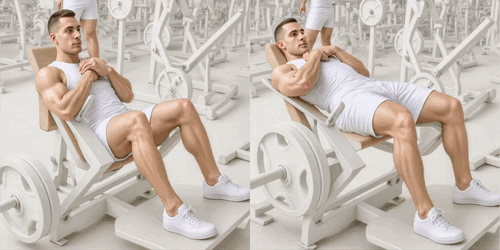
- Machine hip thrusts: stable, comfortable, and easy to overload.
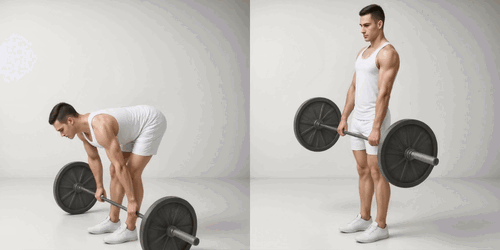
- Romanian deadlifts: especially useful for the lower glutes and glute-hamstring area.
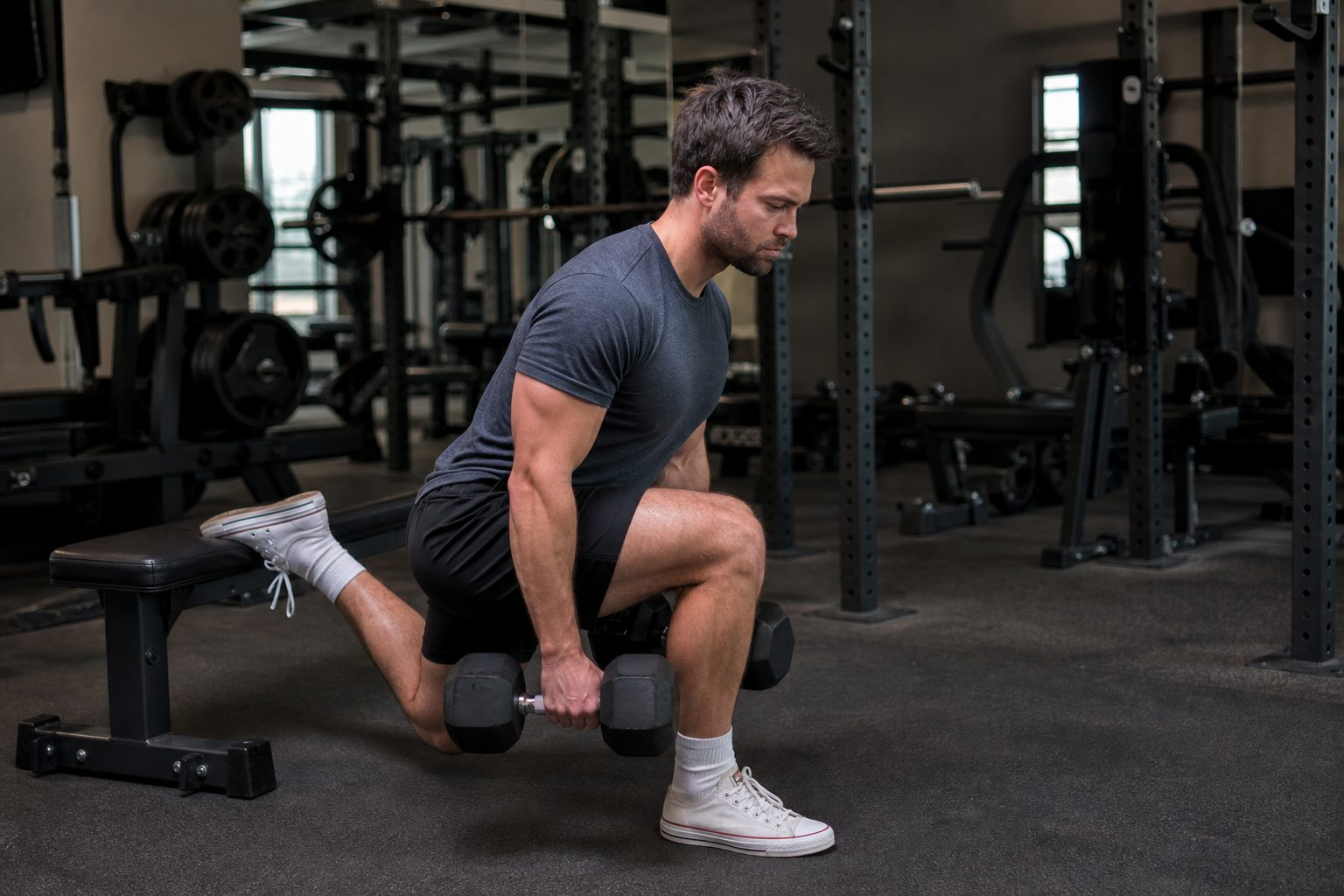
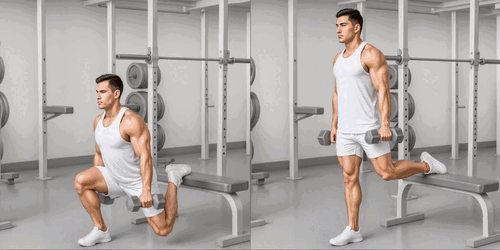
- Bulgarian split squats: combine a deep stretch with single-leg stability.
- Hip abduction machines: directly train the upper glutes.
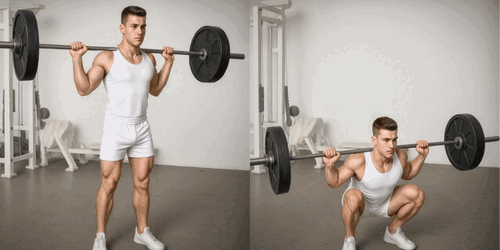
- Squats: effective when performed deeply enough and progressed consistently.
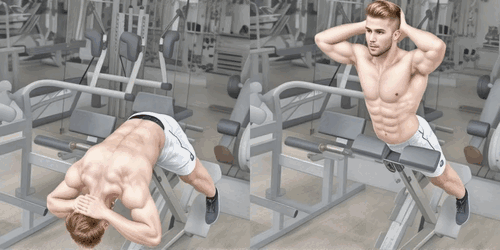
- Back extensions: an underrated way to train hip extension with less setup.
No single exercise is best for every part of the glutes. A productive routine normally includes two or three movement patterns.
Why different glute exercises matter
The glutes are a group of three muscles.
The gluteus maximus is the largest. Its main training role is hip extension, as seen in hip thrusts, squats, lunges, and Romanian deadlifts.
The gluteus medius and gluteus minimus contribute to hip abduction and pelvic stability. They work when you move your leg outward and when you stabilize yourself during single-leg exercises.
This gives you three useful training categories:
| Training role | Good exercise choices |
|---|---|
| Hip extension in a shortened position | Hip thrusts |
| Hip extension in a stretched position | Lunges, split squats, squats, Romanian deadlifts |
| Direct hip abduction | Hip abduction machine, cable abduction |
| Single-leg stability | Lunges, Bulgarian split squats, step-ups |
The practical takeaway is simple: combine movements instead of searching for one universal winner.
What makes a good glute exercise?
1. High muscular tension
An exercise must let the glutes work against meaningful resistance. Feeling a burn is optional. Producing tension is not.
This is why heavily loaded lunges usually offer more growth potential than unweighted donkey kicks.
2. A useful range of motion
Research generally supports training muscles through long ranges of motion. For the glutes, that often means allowing substantial hip flexion at the bottom of a squat, lunge, split squat, or Romanian deadlift.
You do not need to force maximum depth. Use the deepest position you can control without losing pelvic stability or irritating your joints.
3. Clear progression
You should be able to add weight, perform more repetitions, improve control, or increase range of motion.
If an exercise cannot be progressed reliably, it is difficult to know whether your glutes are receiving a stronger stimulus over time.
4. A good stimulus-to-fatigue ratio
Conventional deadlifts train the glutes, but they also create considerable fatigue in the lower back, grip, and entire body. That can make them less efficient when glute growth is the main goal.
Romanian deadlifts usually provide a more targeted option because they preserve the hip hinge while reducing unnecessary fatigue.
The best exercises by training goal
Best overall: walking lunges
Walking lunges train the glutes through a deep stretch while requiring each side to stabilize independently.
Take reasonably long steps and use a slight forward torso lean. Keep your front foot planted and push through the floor without bouncing off the rear leg.
Walking lunges are demanding. Two or three hard sets are usually enough.
Best for stable overload: hip thrust machine
A hip thrust machine makes it easy to focus on hip extension without worrying about balance or an uncomfortable bar position.
Use a controlled lowering phase and finish by extending the hips, not by overextending your lower back. Most lifters do well with sets of 6–15 repetitions.
The limitation is that hip thrusts challenge the glutes most near the shortened position. Pair them with a squat, lunge, or hinge that loads the glutes at longer muscle lengths.
Best for the lower glutes: Romanian deadlift
Romanian deadlifts place high tension on the glutes and hamstrings as the hips move backward.
Keep the weight close to your legs, soften your knees, and stop when further depth would require your lower back to round. Your range of motion depends on your hip mobility and body proportions.
Sets of 6–12 repetitions work well for most people.
Best single-leg option: Bulgarian split squat
Bulgarian split squats provide a deep glute stretch and expose left-to-right strength differences.
A longer stance and modest forward torso lean generally increase glute involvement. Avoid turning the movement into an unstable balancing drill. Use a rack or handle for light support if it lets you train the target muscles harder.
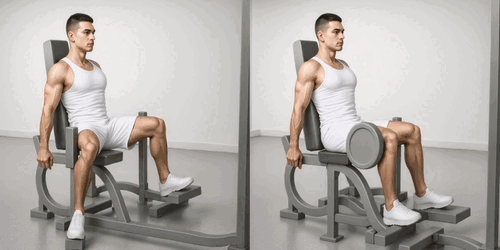
Best for the upper glutes: hip abduction machine
The hip abduction machine directly trains the gluteus medius and minimus. It is stable, simple to load, and well suited to moderate or high repetitions.
Lean forward slightly if that position feels natural and gives you a better stretch. Control both directions instead of allowing the weight stack to slam down.
Use approximately 12–25 repetitions per set.
Useful exercise references
Exercises that are often overrated
Donkey kicks and fire hydrants
These movements can help you warm up or learn how to contract your glutes. The problem is limited loading and low tension in the stretched position.
They are not useless, but they should not form the foundation of a hypertrophy program.
Banded lateral walks
Banded walks can prepare the hips for training and help beginners feel the upper glutes working. They become less useful when you need measurable progressive overload.
Treat them as preparation, not as your main upper-glute exercise.
Kettlebell swings
Swings are useful for conditioning and explosive hip extension. For muscle growth, the repetitions are fast and the tension is brief.
A controlled Romanian deadlift or back extension is usually easier to standardize and progress.
A practical glute workout
Train this session once or twice per week depending on your full lower-body routine:
- Bulgarian split squat: 3 sets of 8–12 repetitions per leg
- Hip thrust machine: 3 sets of 6–12 repetitions
- Romanian deadlift: 2–3 sets of 8–12 repetitions
- Hip abduction machine: 2–3 sets of 15–25 repetitions
Stop most sets with roughly one to three good repetitions left. Isolation work can occasionally be taken closer to failure because it creates less systemic fatigue.
This session provides:
- A deep single-leg movement
- Shortened-position hip extension
- Lengthened-position hip extension
- Direct upper-glute work
Start with around ten hard weekly sets for the glutes. Add volume only if you are recovering and your performance is no longer improving.
Common glute-training mistakes
- Chasing sensation instead of progression: A strong burn does not guarantee a strong growth stimulus.
- Using only hip thrusts: They are effective, but they do not replace stretched-position training.
- Adding too many activation drills: Warm-ups should prepare you, not exhaust you.
- Changing exercises every week: Keep key movements long enough to measure improvement.
- Ignoring range of motion: Heavy partial repetitions can hide weak technique.
- Turning every set into failure: This creates fatigue that can reduce performance in later exercises.
- Using soreness as the main progress marker: Soreness is inconsistent and often decreases as you adapt.
How to track glute progress
Record the exercise, load, repetitions, sets, and relevant setup details. For split squats, that might include dumbbell weight, stance length, bench height, and whether you used support.
Increase the weight when you reach the top of your target repetition range with consistent technique. Small increases count. You do not need to set a personal record every workout.
Gymfile makes this easier by keeping your workout history, sets, repetitions, weights, rest times, and recovery information together. That gives you a clear answer to the question that matters: are your glute exercises actually improving?
Summary
The best glute program uses complementary movements.
Combine a lunge or split squat, a hip thrust, a Romanian deadlift, and direct hip abduction. Progress them with stable technique, use enough range of motion, and avoid filling your workout with drills that are difficult to load.
Consistency and measurable progression will build more muscle than constantly searching for a secret glute exercise.