The 2-Day Full-Body Workout for Busy Lifters
August 11, 2026
You do not need five long gym sessions per week to make progress. If your exercise selection is strong and your working sets are genuinely hard, two focused full-body workouts can cover a lot.
This plan is built for sessions lasting roughly 35–45 minutes, excluding unusually long waits for equipment.
The simple answer
Train twice per week with at least two recovery days between sessions. Monday and Thursday or Tuesday and Friday both work well.
Each workout uses:
- One main lower-body movement
- One chest press
- One back exercise
- A second lower-body pattern
- A small amount of targeted arm, shoulder, calf, or abdominal work
- Mostly one or two hard working sets per exercise
Low volume does not mean low effort. Most working sets should finish around zero to two reps in reserve. In other words, you should stop when you could perform no more than two additional clean reps.
Warm-up sets do not count toward these totals.
Workout 1: Hinge, horizontal press, and vertical pull
| Exercise | Working sets | Reps | Notes |
|---|---|---|---|
| Dumbbell chest press | 2 | 4–6, then 8–10 | Use a lighter weight for the second set |
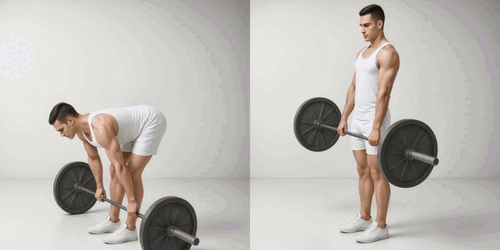
| Romanian deadlift | 2 | 8–10 | Stop before your lower back rounds |
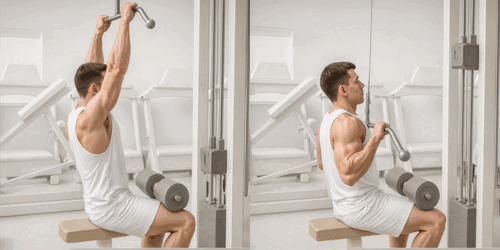
| Cable lat pull-down | 2 | 10–12 | Use controlled, full repetitions |
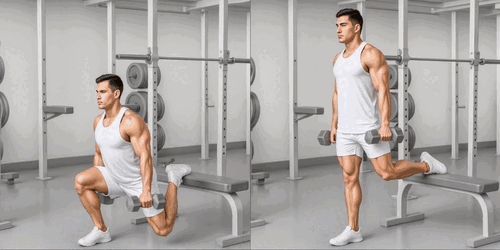
| Bulgarian split squat | 1 per leg | 8–10 | Let the front leg do the work |
| Overhead cable triceps extension | 1 | 12–15 | Optional drop set |
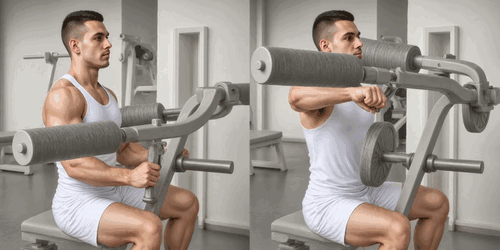
| Lateral raise machine | 1 | 12–15 | Optional drop set |
| Calf press | 1 | 12–15 | Pause in the stretched position |
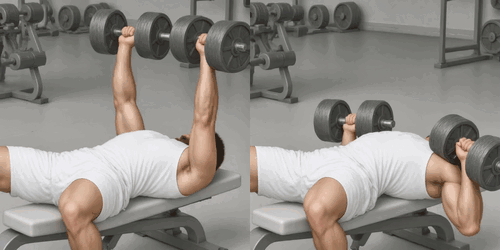

Start the dumbbell press with one heavier set. Rest for two to three minutes, reduce the load by roughly 10–15%, and perform the higher-rep set. This gives you some heavier strength work without requiring several similar pressing exercises.
On Romanian deadlifts, push your hips backward and allow the weight to descend close to your legs. The bottom position is determined by your hamstring mobility, not by whether the plates reach the floor.
Bulgarian split squats are demanding enough that one hard set per leg can be productive. Avoid pushing aggressively from the rear foot. If balance limits you, hold a stable support with one hand and load the other hand.
The final three exercises are short isolation slots. A drop set can add useful work without adding another full rest period. Reach technical failure, reduce the weight by approximately 25–35%, and continue with controlled reps.
Workout 2: Squat, incline press, and row
| Exercise | Working sets | Reps | Notes |
|---|---|---|---|
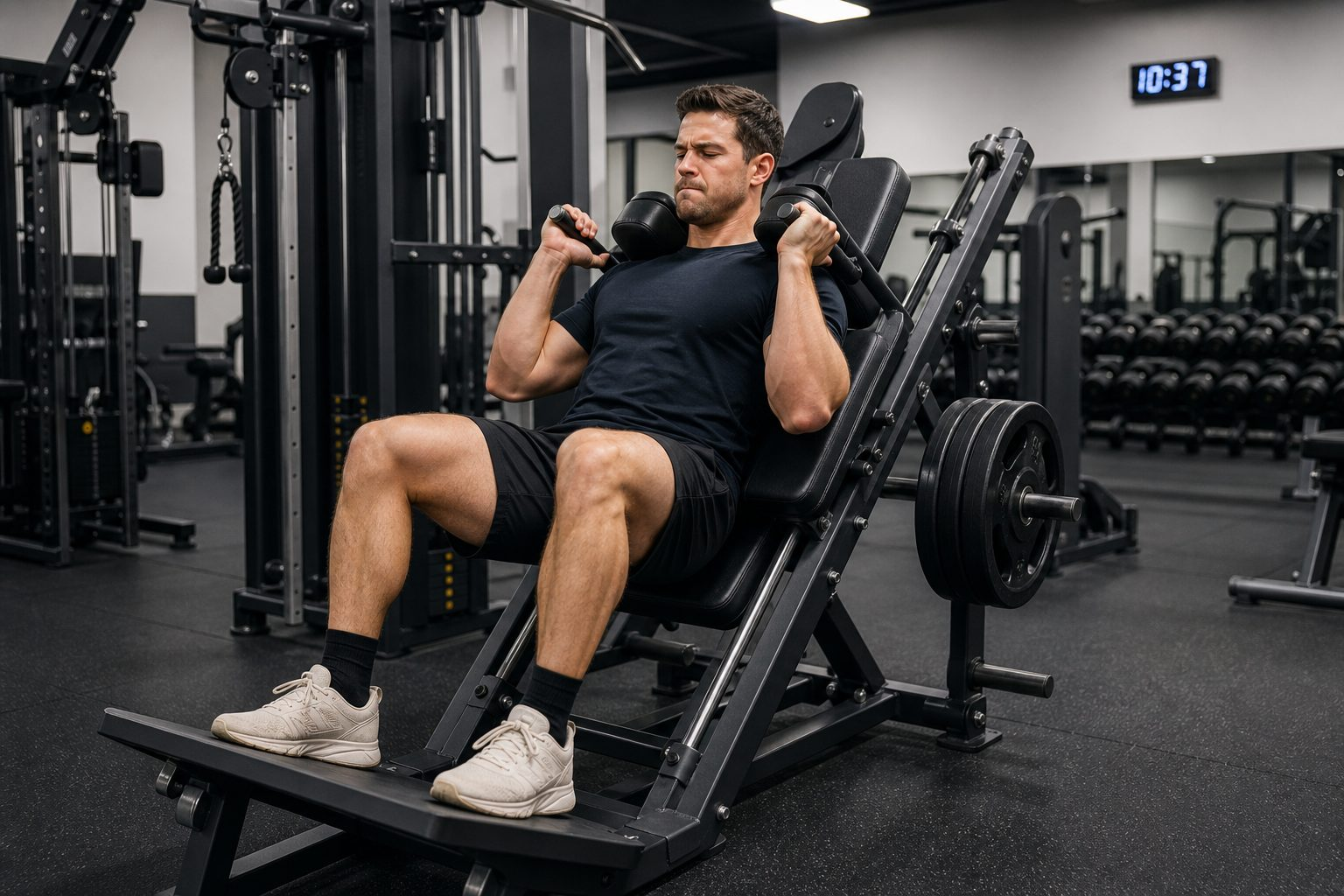
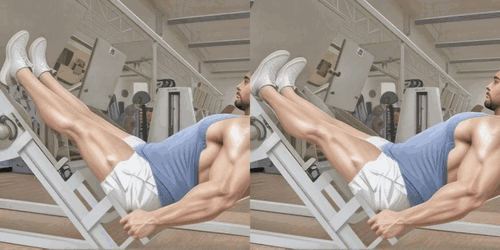
| Hack squat | 2 | 4–6, then 8–10 | Use a lighter back-off set |
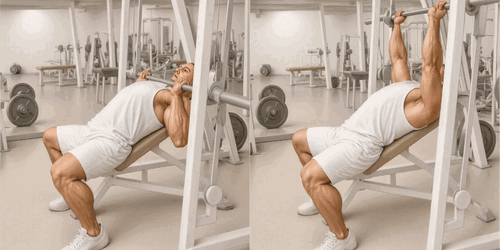
| Smith machine incline bench press | 2 | 8–10 | Use a moderate incline |
| T-bar row machine | 2 | 10–12 | Superset with the incline press |
| Machine seated leg curl | 1 | 10–12 | Optional drop set |
| EZ-bar biceps curl | 1 | 12–15 | Add short rest-pause reps if appropriate |
| Kneeling cable crunch | 1 | 12–15 | Round the torso under control |

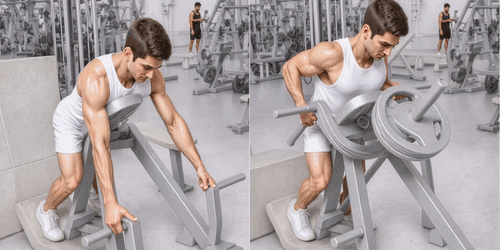
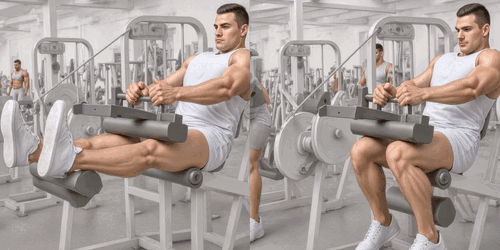
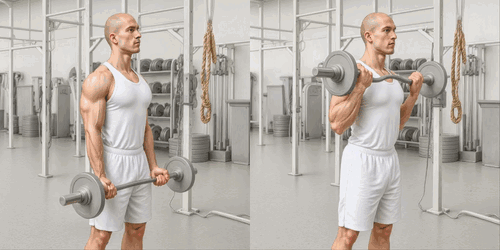
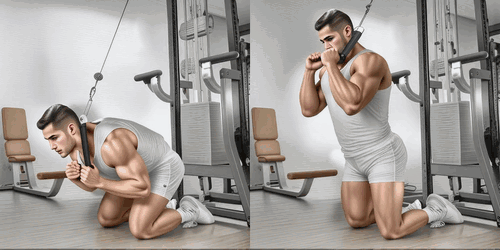
The hack squat is useful here because it provides a stable squat pattern and usually requires less preparation than a heavy free-weight squat. Perform two or three gradual warm-up sets, then complete one heavy top set and one lighter back-off set.
Superset the incline press with the row to save time. You do not need to sprint directly between exercises. Rest for 30–60 seconds after pressing, complete the row, and then rest another 60–90 seconds before starting the next round.
A moderate-to-high incline lets one press train the chest, front delts, and triceps. The row balances that work by training the lats, upper back, rear delts, and elbow flexors.
Why minimalist training can work
Muscles respond to sufficient tension, progression, and recovery. They do not count how many exercises were in your workout.
Research generally supports the idea that multiple weekly sets are useful for muscle growth, but more volume only helps when you can recover from it and maintain set quality. A smaller program can work especially well when it makes you more consistent.
Minimalist training also removes several common sources of wasted time:
- Repeating similar exercises for the same muscle
- Performing more warm-up sets than necessary
- Resting without tracking the time
- Adding low-effort sets after the productive work is finished
- Changing the routine before progression can be measured
The trade-off is that every working set matters. You cannot casually stop five reps before failure and expect one set to replace three challenging sets.
Practical rules for sessions under 45 minutes
Keep the warm-up short and specific
Begin with two to four minutes of easy movement and a few dynamic repetitions for the joints you will train.
For the first compound exercise, use two or three ramp-up sets. Increase the weight while keeping the reps low. Warm-ups should prepare you, not fatigue you.
Later exercises usually need only one quick preparation set, especially when the involved muscles are already warm.
Rest long enough to perform well
Use these ranges as a starting point:
- Heavy compounds: 2–3 minutes
- Moderate-rep compounds: 90–150 seconds
- Isolation exercises: 60–90 seconds
- Between paired exercises: 30–60 seconds
Shorter rest is not automatically more efficient. If rushing causes a large drop in reps or load, you are trading productive training for breathlessness.
Use intensity techniques selectively
Drop sets and rest-pause work are useful for stable isolation exercises. They are less suitable for demanding movements such as Romanian deadlifts, hack squats, or split squats.
Limit intensity techniques to one or two exercises per workout. They are a time-saving tool, not something every set needs.
Standardize your technique
Use the same range of motion and setup each week. If you shorten the movement every time the weight increases, the log may show progression while the muscle receives no greater challenge.
How to progress
Use double progression within each listed rep range.
For example, if an exercise calls for 8–10 reps:
- Choose a weight you can lift for eight clean reps.
- Keep the weight until you reach ten reps.
- Increase the load by the smallest practical amount.
- Build back toward ten reps.
For two-set exercises, increase the load when both sets reach their targets with consistent technique. For unilateral exercises, let the weaker side determine the load and reps.
Do not force weight increases every session. Adding one rep with the same load is progress. Performing the same reps with better control can also be progress, although it is harder to measure objectively.
Common mistakes
Adding exercises every week
The routine is intentionally compact. Run it consistently before deciding it is incomplete. More work is justified when you are recovering well but a specific muscle is not progressing.
Taking compound lifts to uncontrolled failure
Finish close to failure, but stop when technique is about to break down. Failure on a curl is manageable. Failure near the bottom of a Romanian deadlift is a poor trade.
Turning every set into a drop set
Intensity techniques create fatigue quickly. If they reduce performance in the next workout, remove them before removing the main working sets.
Ignoring transitions
A workout with ten minutes of unnecessary setup and wandering will not stay under 45 minutes. Know your next exercise, record the current set, and start the rest timer.
Adapting the plan to more training days
If you later have more time, do not immediately replace the routine.
For three days, keep Workout 1 as a full-body day and split Workout 2 into separate upper- and lower-body sessions. For four days, divide both workouts into an upper/lower schedule.
With five days available, distribute the same movement patterns across upper, lower, push, pull, and leg sessions. Add volume gradually rather than multiplying every exercise and set at once.
Your results should decide whether you need more training. If loads and reps are increasing, your recovery is good, and the target muscles are developing, the program is doing its job.
How Gymfile helps
Minimalist training depends on accurate progression. When there are only a few working sets, forgetting last week’s weight or rep count matters.
Gymfile helps you record sets, reps, weights, rest times, and routines in one place. That makes it easier to repeat the same setup, identify genuine progress, and avoid adding random volume when patience is the better answer.
Summary
Two weekly full-body sessions can build muscle and strength when you train hard, select exercises carefully, and track progression.
Keep the sessions simple. Use mostly one or two productive sets, rest long enough to maintain performance, and reserve intensity techniques for stable isolation work. Run the plan consistently before deciding you need more.