Why Belly Fat Is Usually Last to Go
June 20, 2026
If your arms, chest, face, and legs look leaner but your belly still looks the same, your plan is not automatically failing.
Belly fat often changes later than people expect. The mistake is judging progress only by your stomach and then changing the plan too early.

The simple answer
You lose belly fat by losing total body fat.
You do that with:
- a consistent calorie deficit
- enough protein
- regular strength training
- enough daily movement
- progress tracking that keeps you honest
You cannot force your body to burn fat from one specific area first. Crunches do not “melt” belly fat. More sweat does not mean more stomach fat is being burned.
But belly fat is not impossible. It usually just has phases.
A useful way to think about it is this:
| Phase | What it feels like | Main goal |
|---|---|---|
| Layer 1 | Scale drops, belly looks stubborn | Build habits and keep going |
| Layer 2 | Fat loss slows down | Track calories and activity more tightly |
| Layer 3 | Hunger and fatigue increase | Use smarter food choices and planned breaks |
Most people quit in layer 1 because they think nothing is happening. In reality, fat is often coming off everywhere else first.
Why belly fat feels so stubborn
Many people store a large amount of fat around the waist, especially once body fat gets high enough.
For men, belly fat often becomes a major storage area as body fat rises. For women, fat storage is often more distributed around the hips, legs, and arms, though belly fat still matters.
This is why two people can lose the same amount of weight and see different visual changes.
One person may see their waist shrink quickly. Another may lose fat from the face, chest, arms, and legs first while the belly lags behind.
That does not mean the second person is doing something wrong.
It means the body is pulling fat from different areas at different rates.
The waist is still worth tracking because it gives useful feedback. A few centimeters off the waist is real progress, even if your mirror check after breakfast says otherwise.
Layer 1: build the base
Layer 1 is the early fat-loss phase.
This is where you may have a soft outer layer around the midsection and little to no visible ab definition. The main job here is not perfection. It is building a repeatable system.
For many lifters, this phase can work with simple rules:
- Strength train 3 times per week.
- Eat a lean protein source at every meal.
- Prepare most meals at home.
- Walk around 8,000 steps per day.
- Aim to lose about 0.5–1% of body weight per week.
- Weigh in regularly and watch the weekly trend.
You may not need to count every calorie at this stage. If your current diet is messy, basic structure can produce a big change.
Good protein options include lean meat, fish, eggs, low-fat dairy, tofu, tempeh, and protein-rich legumes.
Good carb and fiber sources include potatoes, oats, rice, fruit, vegetables, beans, and whole grains.
Do not make layer 1 harder than it needs to be.
The biggest problem here is mental. Your body may look leaner in the face, chest, arms, and legs before your belly looks much different. If you only judge your stomach, you may quit right before progress becomes obvious.
Layer 2: tighten the numbers
Layer 2 starts when progress slows.
This is normal.
As you lose weight, your body burns fewer calories because you are carrying less mass. Your daily movement may also drop without you noticing. You sit more. You fidget less. You take fewer unnecessary steps.
That means the same plan that worked before may now only maintain your weight.
At this point, you usually need more precision.
Practical changes:
- Increase steps from around 8,000 to around 10,000 per day.
- Track calories for at least a few weeks.
- Keep protein high.
- Keep lifting heavy enough to maintain strength.
- Avoid adding excessive cardio that wrecks recovery.
A simple calorie starting point for fat loss is body weight in pounds multiplied by 10–12.
Example:
| Body weight | Starting calorie range |
|---|---|
| 170 lb | 1,700–2,040 kcal |
| 190 lb | 1,900–2,280 kcal |
| 210 lb | 2,100–2,520 kcal |
This is not perfect. It is a starting point.
Your actual intake should be adjusted based on your weekly weight trend, waist measurement, gym performance, hunger, and recovery.
For strength training, most people should keep at least 2–4 sessions per week during fat loss. You are not just trying to burn calories. You are telling your body to keep muscle.
A simple full-body session can work well:

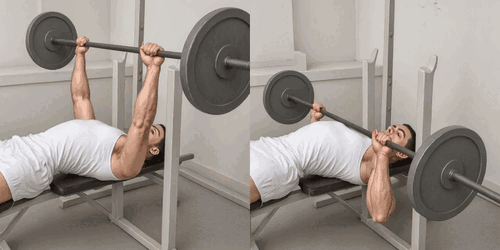

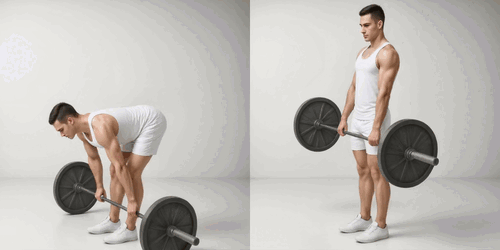



Use controlled form. Keep 1–3 reps in reserve on most working sets. Train hard, but do not turn every session into a survival test.
Layer 3: stubborn fat and diet fatigue
Layer 3 is the leaner phase.
This is where the lower belly, love handles, hips, and other stubborn areas hang around. Visual changes can happen faster here because there is less fat covering the muscle. But every additional kilogram of fat loss feels harder.
Hunger increases. Energy drops. Sleep can get worse. Training may feel heavier.
This is also where many people panic.
They wake up looking softer, assume they gained fat overnight, and slash calories. Often, that softness is water retention, not fat gain.
Stress, poor sleep, hard training, low calories, high sodium, high carbs after a low-carb period, digestion, and dehydration can all change how your stomach looks day to day.
Do not judge fat loss from one morning.
Use weekly trends.
Better food choices matter more here
When calories get lower, food selection becomes more important.
You want high-satiety foods that give you more fullness per calorie:
- potatoes
- lean protein
- Greek yogurt or similar high-protein dairy
- vegetables
- berries
- oats
- soups
- beans and lentils
- large salads with controlled dressing
- eggs or egg whites
Liquid calories become a bad trade-off for most people in this phase.
Creamy drinks, alcohol, big sauces, oils, and random snacks can burn through your calorie budget fast without keeping you full.
This does not mean your diet has to be miserable. It means the easy calories need to be controlled.
Diet breaks: when pushing harder is not smarter
A diet break means eating more for a short period, usually around maintenance calories.
It is not a binge. It is planned.
A good diet break can last 5–14 days. The goal is to reduce diet fatigue, improve sleep, lower stress, restore training performance, and make the next fat-loss phase more productive.
Use a diet break if:
- weight has stalled for 2+ weeks despite good adherence
- hunger is high all day
- sleep quality is dropping
- training performance is falling hard
- you look flat, tired, and watery
- motivation is becoming a serious issue
Add calories mostly from carbs and some fats. Keep protein consistent. Keep training. Keep steps reasonable.
Then return to your deficit.
Sometimes the best move is not to push harder. It is to recover enough to keep going.
Common mistakes
1. Trying to spot-reduce belly fat
Ab exercises train your abs. They do not choose where fat comes off.
You should train your core, but fat loss still comes from the overall deficit.
2. Changing the plan every week
Fat loss is noisy.
Your weight can jump from water, food volume, salt, soreness, stress, and sleep. If you react to every fluctuation, you will never know what is working.
Give a plan at least 2–3 weeks before judging it.
3. Dropping calories too aggressively
Fast weight loss feels productive until strength crashes, hunger explodes, and you regain the weight.
For most lifters, 0.5–1% of body weight per week is a solid target.
4. Ignoring strength training
If you only diet and do cardio, you increase the risk of losing muscle.
Keep lifting. Keep logging your sets. Try to maintain performance as long as possible.
5. Only using the mirror
The mirror is useful, but unreliable day to day.
Track:
- body weight trend
- waist measurement
- progress photos
- gym performance
- steps
- calories if needed
Progress is easier to see when you have data.
How to apply this in your training
Here is a simple fat-loss structure that works for most beginner-to-intermediate lifters:
Weekly training
- 3–4 strength workouts per week
- 6–12 hard sets per major muscle group per week
- mostly compound lifts plus some isolation work
- 1–3 reps in reserve on most sets
- progressive overload when performance allows
Daily movement
- Start with 8,000 steps per day.
- Move to 10,000 steps if fat loss slows.
- Add cardio only if needed and only if recovery stays good.
Nutrition
- Protein: about 1.6–2.2 g per kg body weight per day.
- Weight loss rate: 0.5–1% of body weight per week.
- Calories: adjust based on weekly trend, not one weigh-in.
- Meals: build around protein, high-fiber carbs, vegetables, and filling foods.
Tracking
- Weigh in most mornings.
- Compare weekly averages.
- Measure waist once per week.
- Take progress photos under the same lighting.
- Track training performance.
This is not flashy. It works because it removes guesswork.
How Gymfile helps
Fat loss is easier when your training data is not scattered.
Gymfile helps you track workouts, sets, reps, weights, rest times, and muscle recovery in one place. That matters during a cut because you need to know whether you are maintaining strength or slowly losing performance.
You can also build structured routines, repeat workouts, and see what you actually did instead of relying on memory.
Want to make your training more consistent? Learn more at gymfile.de.
Summary
Belly fat is usually not the first place you see progress.
That does not mean your plan is broken.
Use the right strategy for the phase you are in:
- Layer 1: build habits and stay consistent.
- Layer 2: track calories, steps, and training more tightly.
- Layer 3: use high-satiety foods, manage fatigue, and consider diet breaks.
Do not chase daily mirror changes. Track the trend.
If your waist is shrinking, your weight trend is moving, and your strength is holding steady, you are doing the right work.