Beginner 5×5 Strength Program
September 1, 2026
A 5×5 program gives beginner lifters what they usually need most: a small exercise list, regular practice, and an obvious way to progress.
The format is simple, but it is often applied badly. Five hard sets are not mandatory for every exercise, and adding weight only works while your technique and recovery remain under control.
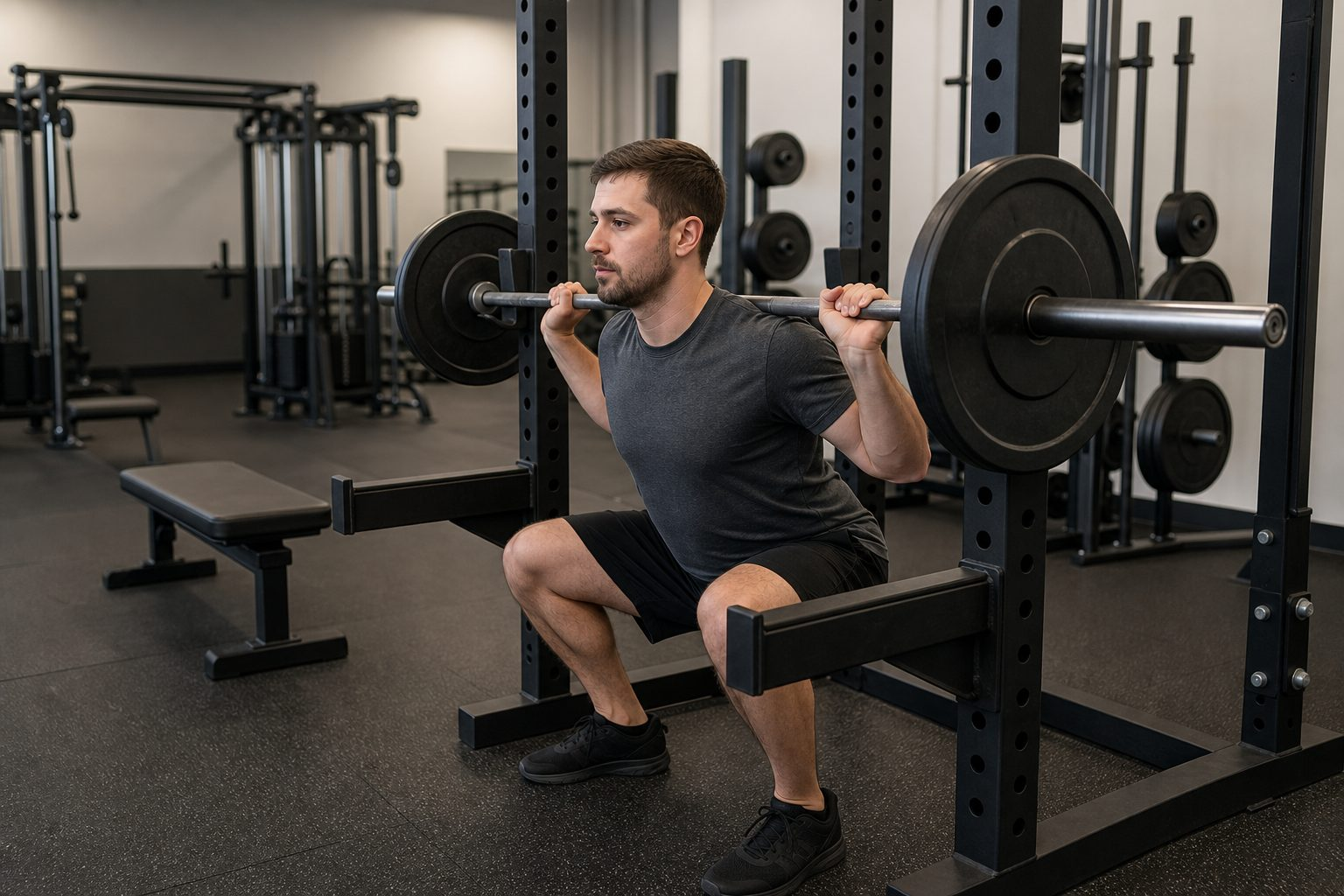
The simple answer
Five sets of five means completing five work sets with five repetitions in each set. That produces 25 work repetitions.
It does not mean every movement in the workout needs to use 5×5.
Use the format for your main strength exercises. Use fewer sets or moderate repetition ranges for movements that create more fatigue, need less technical practice, or serve as accessory work.
For this program, you will:
- Train three non-consecutive days per week.
- Alternate between Workout A and Workout B.
- Use 5×5 for the main squat and pressing exercises.
- Perform fewer deadlift sets to control fatigue.
- Start with approximately four repetitions in reserve.
- Add small amounts of weight after successful sessions.
That is enough structure to drive progress without making the program unnecessarily complicated.
Why 5×5 works
Five-repetition sets let you train with relatively heavy resistance while still getting enough practice to improve your technique.
The useful parts of 5×5 are not tied to the exact number 25. The real benefits are:
- Repeated practice: You perform the main movement patterns regularly.
- Measurable progression: Sets, repetitions, and loads are easy to compare.
- Appropriate loading: Sets of five work well for strength-focused training.
- Simple decisions: You know when to add weight, repeat it, or reduce it.
- Limited exercise selection: You spend more time improving and less time changing routines.
Research generally supports heavier loading for maximal strength, multiple work sets, regular practice, and progressive overload. It does not show that five sets are uniquely optimal.
Five sets can work well. They are a tool, not a law.
Weekly schedule
Train three times per week with at least one recovery day between sessions.
| Week | Session 1 | Session 2 | Session 3 |
|---|---|---|---|
| 1 | Workout A | Workout B | Workout A |
| 2 | Workout B | Workout A | Workout B |
Continue alternating the sequence. Do not restart with Workout A every Monday.
If you miss a session, perform the next scheduled workout when you return. Do not squeeze two full-body sessions together to catch up.
Workout A
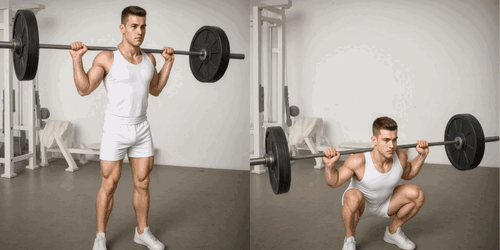
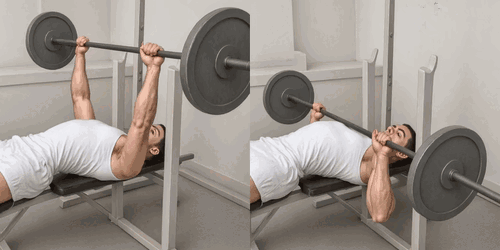
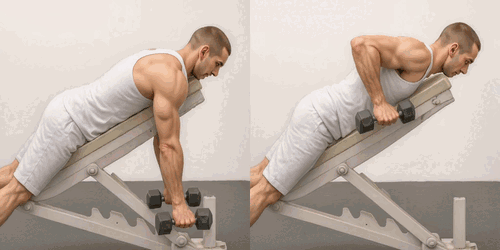
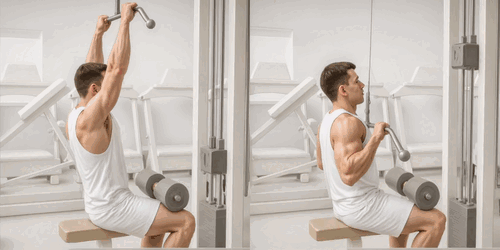
Use these prescriptions:
| Exercise position | Sets × reps | Rest |
|---|---|---|
| Squat | 5 × 5 | 3–4 minutes |
| Bench press | 5 × 5 | 2–4 minutes |
| Chest-supported row | 5 × 5 | 2–3 minutes |
| Lat pulldown | 2 × 8–12 | 1–2 minutes |
The pulldown is optional during your first two weeks. The three main exercises already provide a substantial workload.
Workout B
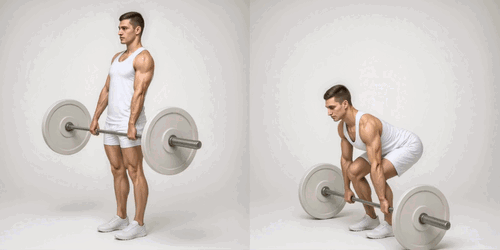

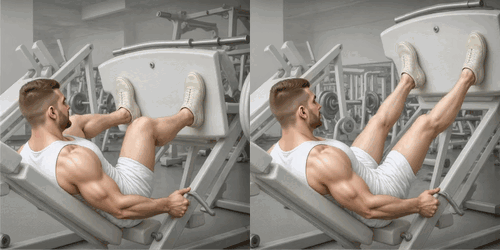
Use these prescriptions:
| Exercise position | Sets × reps | Rest |
|---|---|---|
| Deadlift | 3 × 5 | 3–4 minutes |
| Shoulder press | 5 × 5 | 2–4 minutes |
| Lat pulldown | 3 × 8–10 | 1–2 minutes |
| Leg press | 2 × 8–10 | 2 minutes |
The deadlift uses 3×5 rather than 5×5 because five heavy deadlift sets can create more fatigue than a beginner needs. The objective is to strengthen and practice the movement, not force every exercise into the same format.
How heavy should you start?
Do not test your maximum before starting.
Choose a weight that leaves approximately four good repetitions in reserve on your first work set. In practical terms, your set of five should feel controlled enough that you could have completed about nine repetitions if required.
The fifth set will naturally feel harder than the first. It should still be technically repeatable.
If you know your approximate one-repetition maximum, 60–70% can be a reasonable starting area. If you do not know it, gradually add weight during the first session until five repetitions feel challenging but comfortable.
Starting too light is rarely a problem. Starting too heavy can turn the first week into a failed strength test.
Warm-up sets do not count
Your five work sets begin after your warm-up.
Before the first major exercise, perform several progressively heavier sets without creating fatigue. For example, before a 60 kg squat workout:
| Set | Load | Reps |
|---|---|---|
| Warm-up 1 | Empty bar | 8–10 |
| Warm-up 2 | About 25 kg | 5 |
| Warm-up 3 | About 40 kg | 3 |
| Warm-up 4 | About 50 kg | 1–2 |
| Work sets | 60 kg | 5 × 5 |
Later exercises usually need fewer warm-up sets because you are already warm. One light set of five, one moderate set of three, and one heavier set of one or two repetitions is often enough.
How to progress
After each main exercise, review the final work set.
Add weight next time when:
- You completed every prescribed repetition.
- Your technique remained stable.
- You had roughly one to three repetitions in reserve.
- The final repetition was slow but not a technical grind.
Useful starting increments are:
| Exercise | Typical increase |
|---|---|
| Squat | 2.5 kg |
| Deadlift | 2.5–5 kg |
| Bench press | 1–2.5 kg |
| Shoulder press | 1–2 kg |
| Row | 1–2.5 kg |
Use the smallest practical increase available. A small jump that you can repeat is more useful than a large jump followed by missed repetitions.
Repeat the weight when:
- You completed the repetitions, but technique deteriorated.
- The final set was close to failure.
- You shortened the range of motion.
- Rest periods or poor concentration affected performance.
Progressive overload does not require adding weight after every completed workout. Better execution at the same load can also represent progress.
What to do after a missed repetition
Do not keep attempting failed repetitions to satisfy the written plan.
If you miss a repetition:
- End the set safely.
- Keep the same load for the next session.
- Rest properly and try again.
- Check whether the starting weight or previous increase was too aggressive.
If you fail the same load twice, reduce it by approximately 7.5–10% and rebuild with smaller increases.
If you return to the same sticking point after a reset, stop repeating the reset indefinitely. Change that lift to 3×5, increase the load weekly rather than every session, or use one lighter exposure during the week.
Linear progression is useful, but it does not last forever.
Common 5×5 mistakes
Turning every set into a maximum effort
Training to failure is not required for strength. Leaving repetitions in reserve improves technique and makes three weekly full-body sessions easier to recover from.
Resting only 60 seconds
Short rests can turn strength work into conditioning. Take two to four minutes before another demanding set.
Adding weight despite poor technique
A heavier partial squat is not automatically progress over a lighter full-range squat. Standardize the movement before comparing loads.
Doing 5×5 for every accessory
Five sets of curls, extensions, pulldowns, and machine work can make sessions long without adding much useful strength practice.
Changing the program too soon
A poor session is not a plateau. Review the program after roughly 8–12 weeks, or when several lifts repeatedly stall despite sensible resets.
How Gymfile helps
A progression plan only works when you know what happened last time.
Gymfile helps you record sets, repetitions, weights, rest times, and exercise history. That makes the important decisions easier: add weight, repeat the load, reduce volume, or reset after a genuine stall.
You can also monitor whether performance is trending upward instead of judging the program by one unusually good or bad workout. Learn more about Gymfile.
Summary
A beginner 5×5 program should be simple, conservative, and repeatable.
Train three non-consecutive days, alternate the two workouts, start with several repetitions in reserve, and add the smallest sensible amount after technically strong sessions. Warm-up sets do not count as work sets, and not every exercise needs five sets.
Most importantly, do not confuse progression with blindly adding plates. The program is working when your strength rises while your technique and recovery remain stable.