Kannst du gleichzeitig Muskeln aufbauen und Fett verlieren?
27. Mai 2026
Ja, du kannst gleichzeitig Muskeln aufbauen und Fett verlieren.
Das ist keine Magie. Es funktioniert auch nicht nur bei Anfängern. Aber es braucht das richtige Setup: hartes Training, genug Protein, kontrollierte Kalorien, guten Schlaf und konsequentes Tracking.
Die einfache Antwort
Body Recomposition bedeutet, Muskeln aufzubauen und gleichzeitig Fett zu verlieren.
Für viele Trainierende ist das realistisch. Besonders, wenn du:
- neu im ernsthaften Krafttraining bist
- nach einer Pause wieder einsteigst
- übergewichtig bist oder zusätzliches Körperfett mitbringst
- zwar regelmäßig trainierst, aber noch nicht besonders effektiv
- besser isst als früher
- endlich deine Workouts sauber trackst
Nur sehr fortgeschrittene Trainierende, die bereits lean, stark, konstant und nah an ihrem natürlichen Muskelaufbau-Limit sind, sollten mit sehr langsamer Recomposition rechnen.
Das ist eine kleine Gruppe.
Die meisten Leute in einem normalen Gym haben noch viel Potenzial bei Training, Ernährung, Regeneration oder Konstanz. Das bedeutet: Recomposition ist möglich.
Warum Recomposition funktioniert
Muskeln und Fett sind nicht dasselbe Gewebe.
Du musst kein Fett aufbauen, um Muskeln aufzubauen. Du brauchst einen ausreichend starken Trainingsreiz, genug Protein, genug Regeneration und genug verfügbare Energie.
Diese Energie kann aus Nahrung kommen. Wenn du aber bereits Körperfett mitbringst, kann ein Teil davon auch aus gespeicherter Energie kommen.
Deshalb kann ein Anfänger mit zusätzlichem Körperfett oft auch im Kaloriendefizit Muskeln aufbauen. Der Körper hat reichlich gespeicherte Energie, und der Trainingsreiz ist neu genug, um Muskelwachstum anzustoßen.
Je fortgeschrittener und leaner du bist, desto schwieriger wird das aber.
Dann funktioniert Muskelaufbau meist besser rund um Erhaltungskalorien oder mit einem kleinen Überschuss.
Training ist der Haupttreiber
Ernährung ist wichtig, aber Training ist der Motor.
Du kannst perfekt essen und trotzdem kaum Muskeln aufbauen, wenn dein Training schwach ist. Recomposition braucht progressives Krafttraining.
Konzentriere dich auf:
- harte Sätze nah am Muskelversagen
- saubere Technik
- genug wöchentliches Volumen
- wiederholbare Übungen
- progressive Überlastung über die Zeit
Für die meisten Trainierenden ist ein sinnvoller Startpunkt 10–20 harte Sätze pro Muskelgruppe pro Woche.
Starte eher bei 10, wenn du neuer bist, viel um die Ohren hast, diätest oder schlecht regenerierst. Gehe nur Richtung 15–20, wenn du Fortschritte machst und dich gut erholst.
Mehr Volumen ist nicht automatisch besser. Junk Volume zählt trotzdem als Ermüdung.
Wähle dein Hauptziel
Du kannst Muskelaufbau und Fettverlust gleichzeitig anpeilen, aber eines davon sollte Priorität haben.
Wenn du bereits lean bist, mache Muskelaufbau zur Priorität.
Zum Beispiel:
- Männer bei etwa 8–12% Körperfett
- Frauen bei etwa 18–22% Körperfett
In diesem Fall nutze Erhaltungskalorien oder einen kleinen Überschuss.
Wenn du mehr Fett verlieren willst, mache Fettverlust zur Priorität.
Zum Beispiel:
- Männer bei etwa 15–20%+ Körperfett
- Frauen bei etwa 25–30%+ Körperfett
In diesem Fall nutze ein kleines bis moderates Defizit und halte deine Trainingsleistung so hoch wie möglich.
Das vermeidet den häufigen Fehler, gleichzeitig aggressiv diäten und schnell Muskeln aufbauen zu wollen.
Setze Kalorien rund um Erhaltung
Erhaltungskalorien sind der Mittelpunkt.
Von dort aus:
| Hauptziel | Kalorienziel |
|---|---|
| Muskeln aufbauen und lean bleiben | Erhaltung bis 5–15% Überschuss |
| Fett verlieren und Muskeln aufbauen/halten | 10–20% Defizit |
| Anfänger mit höherem Körperfett | 10–20% Defizit ist meist in Ordnung |
| Leaner Intermediate-Lifter | Erhaltung oder kleiner Überschuss ist meist besser |
Ein riesiger Überschuss ist für Muskelaufbau nicht nötig.
Ein großer Bulk kann das Körpergewicht schneller erhöhen, aber viel von diesem zusätzlichen Gewicht kann Fett sein. Wenn dein Ziel eine bessere Physique ist und nicht nur ein schwererer Körper, sollte der Überschuss kontrolliert sein.
Eine gute Lean-Gain-Rate ist langsam:
- etwa 0,25–0,5% des Körpergewichts pro Woche beim Zunehmen
- etwa 0,5–1% des Körpergewichts pro Woche beim Fettverlust
Wenn du schneller zunimmst, baust du wahrscheinlich unnötig Fett auf.
Protein ist sehr wichtig
Protein ist das wichtigste Makro für Recomposition.
Ein gutes Ziel für die meisten Trainierenden ist:
- 1,6–2,2 g Protein pro kg Körpergewicht pro Tag
- bis zu 2,2–2,7 g/kg, wenn du lean bist, diätest oder sehr hungrig bist
Für einen 75-kg-Lifter bedeutet das ungefähr:
- 120–165 g pro Tag in den meisten Situationen
- bis etwa 200 g, wenn du hart diätest und bereits lean bist
Du brauchst kein perfektes Timing. Aber es hilft, Protein über den Tag zu verteilen.
Ein einfaches Setup:
- 3–5 proteinreiche Mahlzeiten pro Tag
- 25–50 g Protein pro Mahlzeit
- Protein vor oder nach dem Training
- eine langsam verdauliche Proteinmahlzeit vor dem Schlafen, wenn sie in deine Routine passt
Proteinpulver ist nichts Besonderes. Es ist einfach praktisch. Nutze es, wenn es dir hilft, dein Ziel zu erreichen.
Fette nicht zu stark kürzen
Die Fettzufuhr sollte nicht auf null gedrückt werden.
Ein praktisches Minimum liegt bei etwa 20% der Gesamtkalorien.
Wenn Protein und Fett festgelegt sind, füllst du den Rest mit Kohlenhydraten auf.
Kohlenhydrate sind nützlich, weil sie die Trainingsleistung unterstützen. Bessere Trainingsleistung bedeutet meist besseren Muskelerhalt und besseres Wachstum.
Wenn du also hart trainierst, hab keine Angst vor Kohlenhydraten. Lege mehr davon rund um deine Workouts, wenn dir das hilft, besser zu trainieren.
Sinnvolle Übungen für Recomposition
Die besten Übungen sind die, die du sauber ausführen, über die Zeit steigern und gut regenerieren kannst.
Nutze eine Mischung aus stabilen Grundübungen und gezieltem Zubehörtraining.
| Übung | Warum sie hilft |
|---|---|
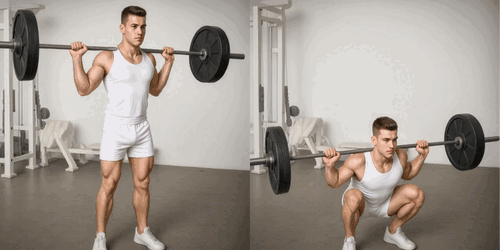 |
Großer Unterkörperreiz, Progression lässt sich leicht tracken |
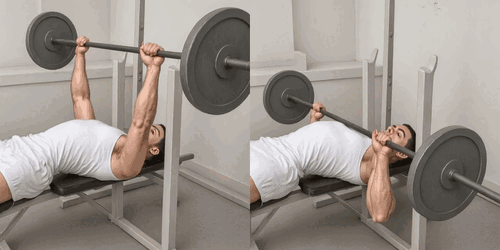 |
Starker Builder für Brust, Schultern und Trizeps |
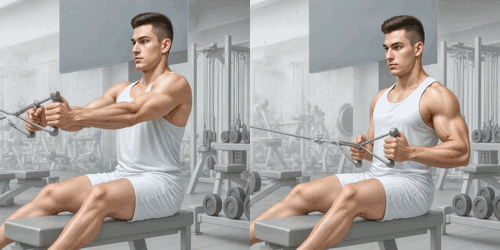 |
Stabile Rückenübung mit gutem Progressionspotenzial |
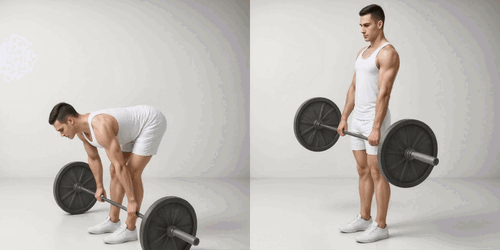 |
Sehr gut für Hamstrings, Glutes und hintere Kette |
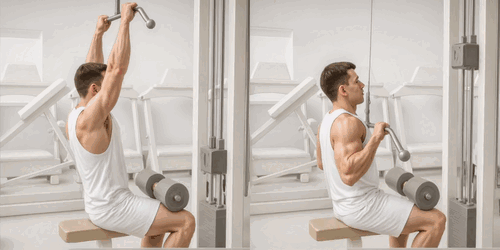 |
Guter vertikaler Zug für Lats und oberen Rücken |
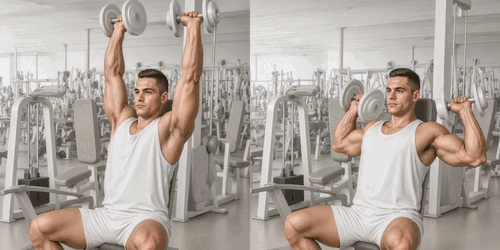 |
Baut Schultern mit natürlichem Bewegungsradius auf |
Diese Übungen sind nicht verpflichtend. Sie sind Beispiele für gut trackbare Bewegungen, die Progression einfacher machen.
Häufige Fehler
Zu aggressiv diäten
Wenn das Defizit zu groß ist, sinkt die Trainingsleistung.
Das macht Muskelaufbau schwieriger und Muskelverlust wahrscheinlicher.
Ein moderates Defizit ist für Recomposition meist besser als eine Crash-Diät.
Zu hart bulken
Ein großer Überschuss kann dich schneller stärker machen, erhöht aber auch den Fettaufbau.
Wenn du später nicht monatelang cutten willst, halte den Überschuss klein.
Routinen zu oft ändern
Recomposition braucht Vergleichbarkeit.
Wenn du jede Woche Übungen wechselst, kannst du nicht erkennen, ob du wirklich Fortschritte machst.
Halte deine Hauptübungen mindestens 6–10 Wochen stabil.
Training mit zu wenig Einsatz
Recomposition passiert nicht durch leichte Sätze.
Die meisten Arbeitssätze sollten etwa 0–3 Wiederholungen vom Muskelversagen entfernt liegen, besonders bei sichereren Maschinen-, Kabel- und Isolationsübungen.
Du musst nicht ständig maxen. Aber die Sätze müssen hart genug sein, um relevant zu sein.
Schlaf ignorieren
Schlaf beeinflusst Hunger, Leistung, Regeneration und Körperkomposition.
Wenn du schlecht schläfst, kannst du trotzdem Gewicht verlieren, aber mehr davon kann aus fettfreier Masse statt aus Fett kommen.
Peile 7–9 Stunden an, wenn möglich. Wenn das unrealistisch ist, halte deinen Schlaf zumindest konstant und vermeide, schlechten Schlaf zu deiner normalen Basis zu machen.
Supplements, die helfen können
Supplements verursachen Recomposition nicht von allein.
Ein paar sind aber nützlich:
- Kreatin-Monohydrat: 3–5 g pro Tag
- Proteinpulver: sinnvoll, wenn Protein aus Lebensmitteln nicht reicht
- Koffein: nützlich vor harten Einheiten, aber Toleranz baut sich auf
Mach es nicht unnötig kompliziert. Kreatin, Protein und Koffein decken den größten Teil des Sinnvollen ab.
So setzt du es in deinem Training um
Nutze dieses einfache Setup:
- Wähle dein Hauptziel: Fettverlust oder Muskelaufbau.
- Setze Kalorien rund um Erhaltung.
- Iss jeden Tag genug Protein.
- Trainiere jeden Muskel mit 10–20 harten Sätzen pro Woche.
- Halte Übungen lange genug stabil, um Fortschritt zu tracken.
- Steigere Gewicht, Wiederholungen oder Kontrolle über die Zeit.
- Schlafe genug, um dich zu erholen.
- Passe auf Basis echter Daten an, nicht nach Gefühl.
Tracke mindestens:
- Körpergewichtstrend
- Trainingsleistung
- Sätze, Wiederholungen und Gewichte
- Muskelumfänge oder Fortschrittsfotos
- Regeneration und Muskelkater
Wenn dein Gewicht fällt, deine Lifts aber stabil bleiben oder besser werden, läuft deine Recomposition wahrscheinlich gut.
Wenn dein Gewicht langsam steigt und dein Taillenumfang stabil bleibt, kann das ebenfalls Recomposition sein.
Wenn dein Gewicht schnell steigt und dein Taillenumfang deutlich zunimmt, ist dein Überschuss wahrscheinlich zu hoch.
Wie Gymfile hilft
Gymfile macht Recomposition einfacher, weil es die wichtigen Daten an einem Ort hält.
Du kannst Sätze, Wiederholungen, Gewichte, Pausenzeiten, Routinen und deinen Fortschritt über die Zeit tracken. Du kannst auch sehen, welche Muskeln du zuletzt trainiert hast, und Regenerationsinformationen nutzen, um bessere Entscheidungen zu treffen, statt zu raten.
Das ist wichtig, weil Recomposition langsam ist.
Du wirst vielleicht nicht jede Woche dramatische Veränderungen sehen. Aber wenn deine Lifts nach oben gehen, dein Körpergewicht kontrolliert ist und deine Routine konstant bleibt, bewegst du dich wahrscheinlich in die richtige Richtung.
Willst du es dir leichter machen? Gymfile hilft dir, Workouts zu tracken, Fortschritt zu überwachen und dein Training zu strukturieren, ohne dich auf dein Gedächtnis zu verlassen.
Du kannst auch Gymfile für iOS herunterladen.
Zusammenfassung
Du kannst gleichzeitig Muskeln aufbauen und Fett verlieren.
Für die meisten Trainierenden ist Recomposition realistisch, wenn Training, Ernährung und Regeneration gemeinsam besser werden.
Die wichtigsten Punkte:
- trainiere hart mit progressiver Überlastung
- iss genug Protein
- bleibe nahe an Erhaltung, in einem kleinen Überschuss oder in einem moderaten Defizit
- vermeide Crash-Diäten und Dirty Bulking
- schlafe genug
- tracke deine Workouts und Körpergewichtstrends
- bleibe lange genug konstant, um Veränderungen zu sehen
Recomposition ist nicht der schnellste Weg, um Muskelaufbau zu maximieren. Sie ist nicht der schnellste Weg, um Fettverlust zu maximieren.
Aber für viele Menschen ist sie der sinnvollste Weg, eine bessere Physique aufzubauen, ohne unnötig Fett zuzulegen.