Beginner Full-Body Workout Program: 3 Days per Week
September 1, 2026
Three full-body workouts per week give beginners enough practice, training volume, and recovery without making the program complicated.
You will train on non-consecutive days, repeat a small group of effective movements, and progress by adding repetitions before adding weight.
The simple answer
Train three times per week with at least one recovery day between sessions when possible.
A practical schedule is:
| Day | Plan |
|---|---|
| Monday | Workout A |
| Tuesday | Rest or normal activity |
| Wednesday | Workout B |
| Thursday | Rest or normal activity |
| Friday | Workout C |
| Saturday | Rest or easy activity |
| Sunday | Rest |
Tuesday, Thursday, and Saturday works equally well. The exact days matter less than spacing the sessions sensibly and following the A → B → C sequence consistently.
Each workout should take roughly 45–60 minutes.
Program rules
Use these targets across the program:
- Work sets: 2 per exercise
- Compound exercise reps: 8–12
- Isolation exercise reps: 10–15
- Normal effort: Finish with about 2 repetitions in reserve
- Compound exercise rest: Around 2 minutes
- Demanding lower-body rest: 2–3 minutes
- Isolation exercise rest: 60–90 seconds
- Progression: Add repetitions first, then increase weight
Two sets are enough to get started. Beginners do not need maximum volume immediately. Your first priorities are learning the exercises, producing consistent repetitions, and recovering well enough to train again.
The three workouts
Workout A
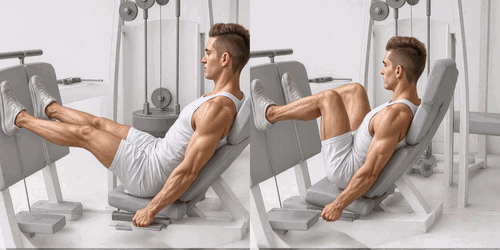
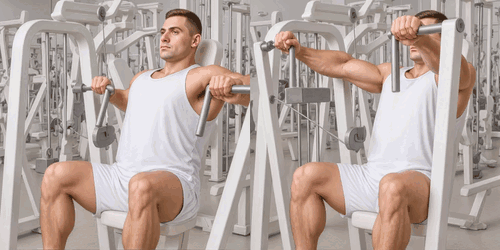
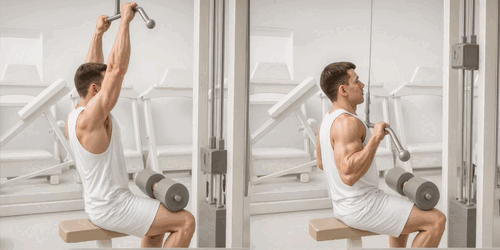


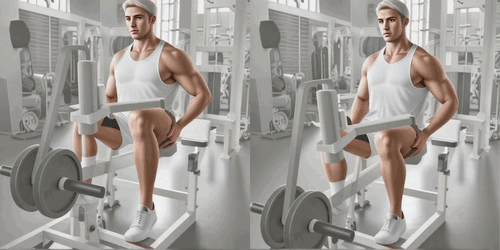
Perform two work sets of every exercise.
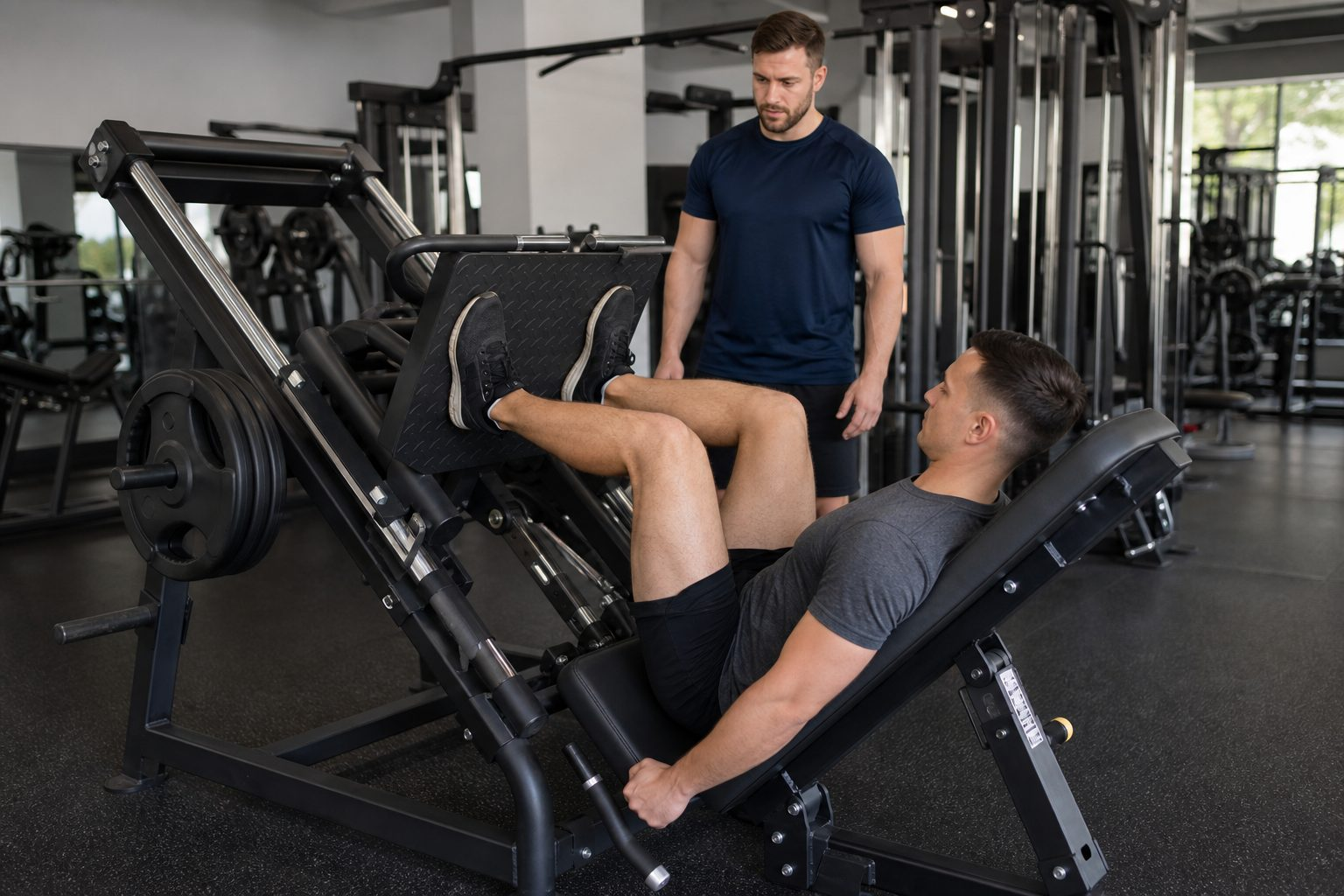
Use 8–12 repetitions for the main presses, pulls, and leg press. Use 10–15 repetitions for the leg curl and calf raise.
Keep your setup consistent. If you change the seat, foot position, grip, or range of motion every session, comparing performance becomes less useful.
Workout B

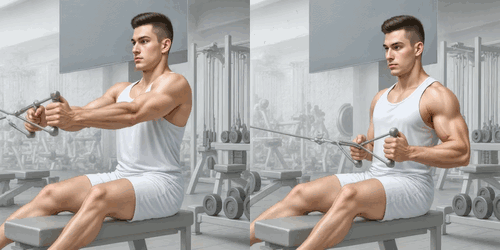
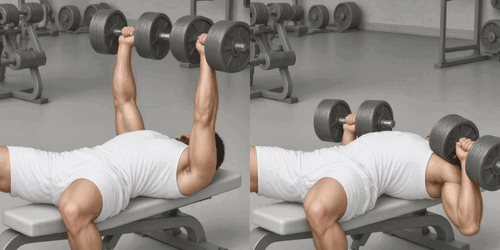
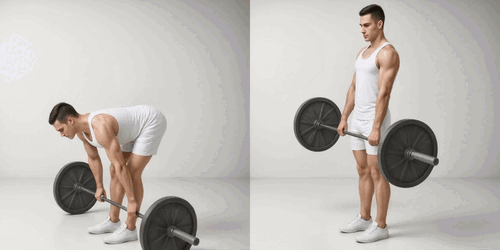
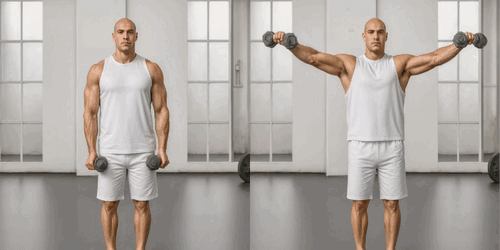
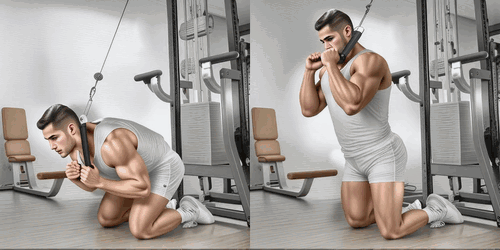
Again, perform two work sets per exercise.
The hip-hinge movement will probably require the most practice. Start light, push your hips backward, maintain a stable back position, and stop when you feel a strong hamstring stretch. Do not chase extra depth by losing control.
Use 10–15 repetitions for the lateral raise and abdominal exercise. A lighter weight with controlled movement is more productive than swinging through the repetitions.
Workout C
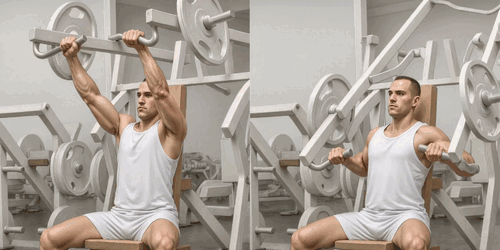
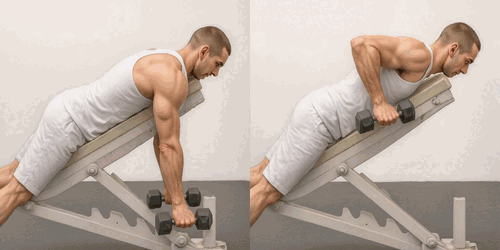
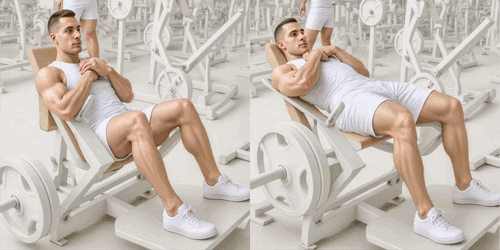
Workout C returns to several stable machine movements. This is intentional, not a lack of variety.
Repeating exercises allows you to improve technique and judge whether you are getting stronger. Constantly changing movements makes progression harder to measure.
How hard should you train?
Use repetitions in reserve, or RIR, to estimate how close a set is to failure.
- 3 RIR: You could perform about three more clean repetitions.
- 2 RIR: You could perform about two more.
- 1 RIR: You might complete one more.
- 0 RIR: No additional clean repetition is available.
During weeks one and two, stay near 3 RIR. Treat these sessions as practice. Find comfortable machine settings, learn the movement paths, and establish useful starting weights.
From week three onward, aim for approximately 2 RIR on most work sets.
You do not need to reach failure. The final repetitions should feel challenging, but they should not involve uncontrolled movement, bouncing, or major technique changes. RIR is only an estimate, especially when you are new, so it is better to begin slightly too light than too heavy.
How to warm up
The warm-up should prepare you without draining energy from your work sets.
Five minutes of easy cycling, walking, or rowing is optional. More importantly, perform lighter preparation sets before the first demanding exercises.
Before the first lower-body movement:
- Perform around 8 easy repetitions with approximately half your work weight.
- Rest briefly.
- Perform 4–5 repetitions with a moderately heavier load.
- Begin your work sets.
Before your first upper-body press and pull, one light set of 6–8 repetitions is usually enough.
Warm-up sets should feel easy. Do not count them as work sets.
How to choose your starting weight
Do not test your maximum.
Choose a load that looks manageable and perform eight controlled repetitions. Then estimate how many more clean repetitions you could have completed.
If five or more remained, increase the weight slightly after resting. Repeat until 8–10 repetitions leave roughly 2–3 repetitions in reserve.
That is your starting load.
The purpose of your first workouts is not to discover the heaviest weight you can survive. It is to establish repeatable technique and numbers you can improve over time.
Progress with double progression
Double progression means increasing repetitions within a range before increasing the weight.
For an exercise prescribed as 2 × 8–12, your first result might be:
- 30 kg × 9
- 30 kg × 8
Keep the same weight next time.
After several sessions, you might reach:
- 30 kg × 12
- 30 kg × 12
If both sets were controlled and finished near the intended RIR, increase the load at the next session. Your repetitions may fall back to eight or nine. Build them toward 12 again.
Use the smallest practical weight increase. Adding one repetition with the same weight is still progression. You do not need to add weight every workout.
What to do when you miss the target
One weak set is not a reason to change the program.
If you complete 10 repetitions on your first set but only seven on your second, keep the same load next time. You may simply have needed more rest.
If your first set falls well below the minimum, reduce the weight by roughly 5–10% for that session.
If the same exercise remains below the target for two consecutive exposures despite normal sleep and recovery, reduce the load by 5–10% and rebuild through the repetition range.
Never force ugly repetitions just to record a bigger number.
Common beginner mistakes
Training every set to failure
High effort matters, but failure is not required. Stopping with around two clean repetitions available produces challenging work without creating unnecessary fatigue.
Resting too little
Short rests are not automatically better. If two minutes have passed but you are still breathing heavily, rest longer. Better recovery usually means stronger, cleaner work sets.
Changing exercises constantly
Adaptation is the goal. Keep most exercises stable for several weeks so you can practise them and track meaningful improvements.
Adding too much weight
The smallest available increase is usually enough. Large jumps often push your repetitions below the target and cause technique to deteriorate.
Using soreness as proof of progress
Soreness is common when you begin, but it is not a progression system. Repetitions, loads, technique, recovery, and consistency are more useful indicators.
Adding unnecessary exercises
More movements do not automatically create a better workout. These sessions already cover the major lower-body, pressing, pulling, shoulder, and trunk functions.
Direct arm work is optional because rows and pulldowns train the elbow flexors, while pressing exercises train the triceps.
What if you miss a workout?
Do not double your next session.
Continue the sequence. If you complete Workout A, miss Workout B, and return later in the week, perform Workout B. Workout C comes after that.
After missing one week, you can usually return with your previous weights while keeping the first session conservative. After a longer break, reducing loads by roughly 5–10% can make the return easier.
How Gymfile helps
A progression system only works when you know what you did previously.
Gymfile lets you record exercises, sets, repetitions, weights, rest periods, and workout history in one place. That makes it easier to repeat your setup, apply double progression, and spot genuine stalls instead of guessing.
Track every work set, but do not obsess over normal day-to-day variation. The useful trend appears across several workouts.
Summary
Train three non-consecutive full-body sessions each week and follow the workouts in A → B → C order.
Start with two controlled sets per exercise, stay around 3 RIR during the first two weeks, and move toward 2 RIR afterward. Add repetitions within the prescribed range before increasing weight.
Keep the exercises stable, rest long enough to perform well, and judge progress by better repetitions, heavier loads, improved technique, and consistent attendance—not soreness or exhaustion.