How to Train in the Heat Without Killing Your Performance
June 25, 2026
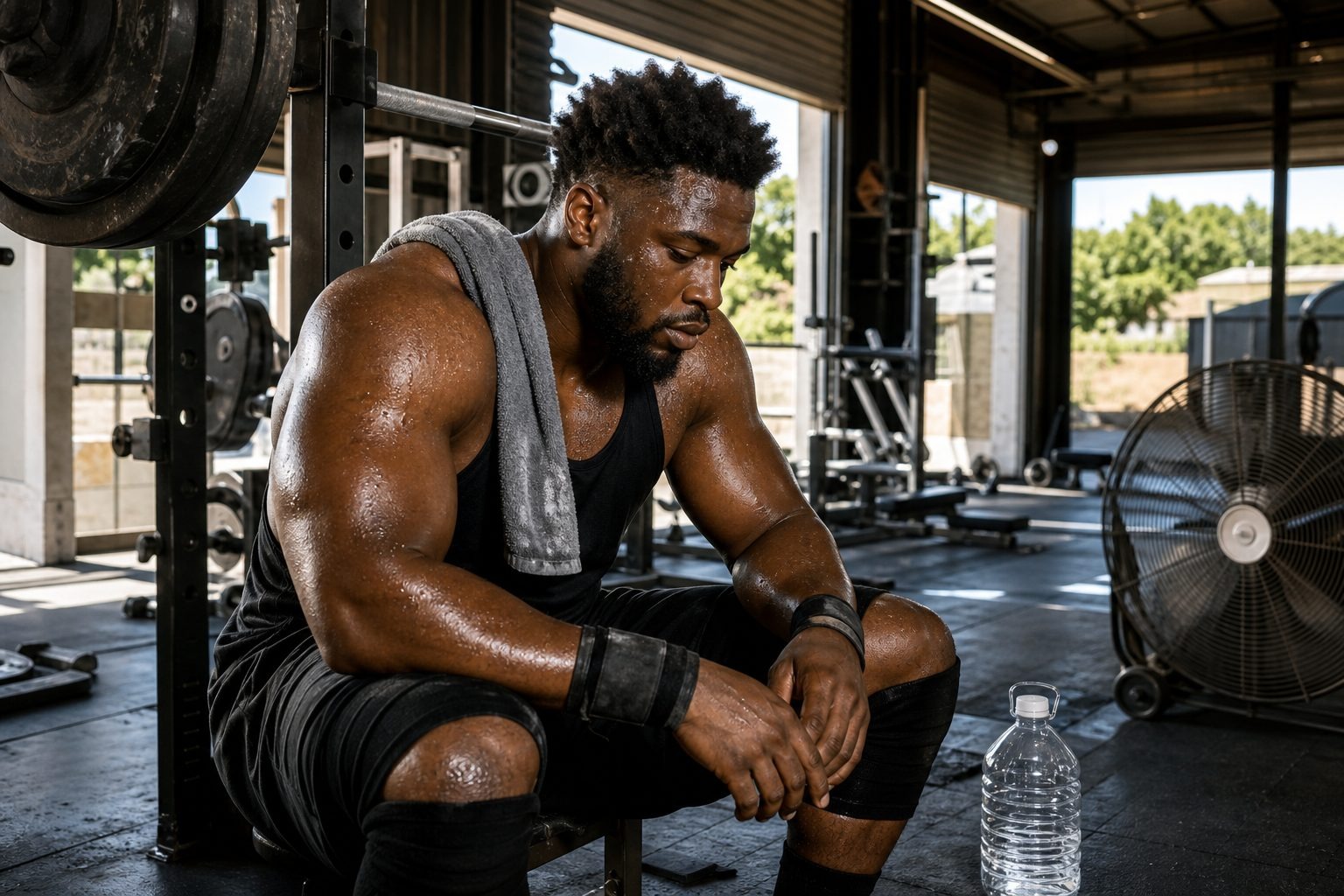
Training in a hot gym is different. Your normal weights may feel heavier, your heart rate climbs faster, and fatigue can hit sooner than expected.
That does not mean you need to stop training hard. It means you need to manage hydration, electrolytes, carbs, exercise selection, and expectations better.
The simple answer
If you train in the heat, your main goal is to keep performance from falling apart.
Do that by focusing on five things:
- Drink enough fluid before and during training.
- Get enough sodium and other electrolytes.
- Use some carbohydrates around hard sessions.
- Adjust training intensity when needed.
- Track performance so you know what is actually changing.
Heat does not automatically ruin your workout. But it increases the cost of training.
Your body has to cool itself while also lifting hard. That means more sweating, higher cardiovascular demand, faster fatigue, and sometimes worse bar speed or endurance.
If you ignore that, you may mistake heat fatigue for weakness.
Why heat changes your workout
In a cool gym, most of your effort can go toward the lift.
In a hot gym, your body spends more energy on temperature control. Blood flow, sweat rate, breathing, and heart rate all change. You may feel fine during warm-ups, then suddenly hit a wall halfway through the session.
Common signs that heat is affecting your training:
- Your warm-up sets feel unusually heavy.
- You need longer rest to feel ready.
- Your pump disappears faster than usual.
- You cramp more often.
- Your grip feels worse because of sweat.
- You feel flat even though your program is normal.
- Your performance drops hard after the first few exercises.
Some drop-off is normal in hot conditions. The mistake is pretending nothing changed and forcing the same session at the same pace.
Good training is not just effort. It is effort you can recover from.
Hydration is not just water
Water matters, but hydration is not only about drinking more.
You also get fluid from food, and you need electrolytes to hold and use that fluid well. Sodium is especially important when you sweat a lot.
If you train hard in the heat and only drink plain water, you may still feel terrible. You can end up diluted, flat, and low on electrolytes.
A simple rule:
- Drink water regularly during the day.
- Salt your meals, especially before hard training.
- Use an electrolyte drink if you sweat heavily.
- Do not wait until you are already thirsty during the session.
For most healthy lifters, sodium is not the enemy when training hard in hot conditions. Sweat contains sodium. If you lose a lot of it and never replace it, performance can suffer.
That said, if you are on a sodium-restricted diet for medical reasons, follow that advice. Do not copy generic gym recommendations blindly.
Eat enough before hot sessions
Training in the heat burns through you faster. If you walk into the gym underfed, the session can crash early.
You do not need a complicated plan. You need a meal that gives you usable energy and does not sit heavy in your stomach.
A good pre-workout meal 1–3 hours before training could include:
- A lean protein source
- A carb source such as rice, potatoes, oats, or fruit
- Some salt
- Enough fluid
Carbs are useful here. They help maintain training output, especially if the session includes high volume, compound lifts, or short rest periods.
If you train for more than 60–75 minutes in a hot gym, sipping carbs and electrolytes during the session can also help. This is not magic. It simply gives your body fluid, sodium, and fuel while demand is high.
Salt your food like someone who trains
Many lifters underdo sodium in summer.
They sweat through their shirt, drink water, avoid salt, and then wonder why they feel weak or get headaches during training.
A practical approach:
| Situation | What to do |
|---|---|
| Light sweat, short session | Water and normal salted meals are often enough |
| Heavy sweat, long session | Add electrolytes during training |
| Hot gym plus high-volume training | Consider carbs plus electrolytes |
| Cramping often | Review sodium, fluids, potassium, total food, and fatigue |
| Feeling bloated from huge water intake | You may need electrolytes, not just more water |
Do not turn this into a contest to consume the most salt possible. More is not always better. The point is to replace what you lose and support performance.
Adjust your training plan in summer
Hot weather is a good time to be honest about programming.
If your gym has poor cooling, peak-strength training may become harder to run. Heavy singles, long sessions, and maximal lower-body days can become brutally expensive.
That does not mean summer training has to be easy. It means you may benefit from shifting the emphasis.
Good hot-weather training options:
- Slightly more hypertrophy work
- More machine-based exercises
- More controlled rep ranges
- Fewer true max attempts
- Slightly longer rest periods
- Shorter but denser sessions
- More focus on technique and consistency
For example, instead of forcing a maximal squat session in extreme heat, you might run hard sets of 6–10, then finish with leg press, leg curls, abs, and calves.
You still train hard. You just stop pretending the environment does not matter.
Use RPE and performance tracking
Heat makes fixed percentages tricky.
If 80% usually feels like an RPE 7, it may feel like an RPE 8 or 9 in a hot gym. That does not mean you got weaker overnight. It may mean your body is under more stress.
Track both the numbers and how the sets feel.
Useful things to record:
- Weight
- Reps
- Sets
- Rest time
- RPE or effort level
- Body weight
- Notes like “very hot gym” or “heavy sweating”
This helps you spot patterns.
If every hot session is down 5–10%, that is useful information. If your numbers return when conditions improve, you did not lose strength. You just trained under harder conditions.
Practical rules for training in the heat
Use these rules when the gym feels like a sauna.
1. Start hydrated before you arrive
You cannot fix a full day of poor hydration in the first five minutes of training.
Drink throughout the day. Add salt to meals. Eat real food. Do not rely on panic-drinking right before your first working set.
2. Extend your warm-up if needed
Heat does not mean you can skip warm-ups.
Your joints may feel warm, but your nervous system and movement pattern still need preparation. Keep the warm-up efficient, but do not rush into heavy sets just because you are already sweating.
3. Rest longer on heavy lifts
If your breathing is still high, your next set will suffer.
In hot conditions, rest may need to increase by 30–90 seconds on demanding compound lifts. This is not laziness. It is performance management.
4. Reduce junk volume
Heat exposes bad programming.
If you already do too many random sets, hot weather will punish you. Keep the exercises that matter. Cut the filler.
5. Keep a towel and manage grip
Sweaty hands can turn a good set into a risky set.
Wipe your hands, wipe the bar if needed, and use chalk if your gym allows it. Grip failure from sweat is not the same as muscular failure.
6. Watch for red flags
Stop or back off if you feel dizzy, confused, chilled despite the heat, nauseous, or unusually weak.
Hard training should feel hard. It should not feel unsafe.
Common mistakes
Mistake 1: Only drinking water
Water without enough electrolytes can leave you feeling flat if you are sweating heavily.
Add sodium through food or an electrolyte drink when conditions demand it.
Mistake 2: Chasing maxes in terrible conditions
You can still lift heavy in summer. But forcing personal records in extreme heat every week is usually a bad trade.
Pick your battles.
Mistake 3: Cutting calories too aggressively
Some lifters use summer to lean out. That can work well.
But if you combine high heat, hard training, low carbs, low sodium, and poor sleep, do not be surprised when performance tanks.
A moderate deficit is usually smarter than a crash diet.
Mistake 4: Ignoring session duration
A two-hour workout in a cool gym is not the same as a two-hour workout in high heat.
Shorter sessions may be better. Get the important work done first.
Mistake 5: Changing your whole program every bad workout
One rough hot workout does not mean your program is broken.
Look at trends. Track multiple sessions. Adjust based on patterns, not emotions.
How to apply this in your training
Here is a simple hot-weather setup.
Before training
- Eat a normal meal with protein, carbs, and salt.
- Drink water steadily during the day.
- Avoid showing up dehydrated and underfed.
- Plan the session so the hardest work comes first.
During training
- Sip water.
- Add electrolytes if you sweat heavily.
- Add carbs if the session is long or high volume.
- Rest long enough to keep quality high.
- Reduce nonessential sets if performance drops fast.
After training
- Eat a real meal.
- Replace fluids.
- Salt your food.
- Track what happened.
- Compare performance to similar sessions.
The goal is not to make every hot session perfect. The goal is to keep training productive.
How Gymfile helps
Heat makes tracking more important, not less.
If you only train by feel, it is easy to overreact. One bad workout feels like lost progress. One good workout feels like everything is fine.
Gymfile helps you track your sets, reps, weights, rest times, and workout history so you can see what is actually happening. You can log notes for hot sessions, compare performance over time, and make better decisions about when to push and when to adjust.
Want to make this easier? Learn more at gymfile.de or download the Gymfile iOS app.
Summary
Training in the heat is not just normal training with more sweat.
You need more attention to fluids, electrolytes, carbs, rest times, and fatigue. You may also need to adjust your program so you are not forcing peak-strength work in the worst possible conditions.
The simple plan:
- Hydrate before training.
- Replace sodium when you sweat heavily.
- Use carbs around hard sessions.
- Rest longer when needed.
- Cut junk volume.
- Track performance instead of guessing.
Hot gyms are manageable. But you have to train like the environment matters.