Push Day Workout for Chest, Shoulders, and Triceps
July 21, 2026
A good push day is not seven random pressing exercises. It should train your chest, shoulders, and triceps without wasting sets or letting fatigue ruin the movements that matter most.
The basic formula is simple: start with your heaviest press, add controlled hypertrophy work, then finish with targeted shoulder and triceps exercises.
The simple answer
An effective push day needs four things:
- A heavy horizontal press for strength practice.
- Additional chest work in a moderate or high rep range.
- Direct training for the side delts.
- Triceps work with your arms in more than one position.
Here is a complete session built around those rules:



Use the following working-set targets:
| Exercise order | Sets | Reps | Effort |
|---|---|---|---|
| Heavy bench press | 1 | 3–5 | About 1 rep in reserve |
| Incline dumbbell press | 2 | 8–10 | 1–2 reps in reserve |
| Arnold press | 3 | 8–10 | 1–2 reps in reserve |
| Single-arm cable chest press | 2 | 12–15 per side | 1–2 reps in reserve |
| Cable lateral raise | 3 | 12–15 per side | 0–2 reps in reserve |
| Cable triceps pushdown | 3 | 8–12 | 1–2 reps in reserve |
| Single-arm overhead triceps extension | 2 | 10–15 per side | 0–2 reps in reserve |
Warm-up sets do not count toward these totals.
Why this exercise order works
Start with the movement that requires the most stability
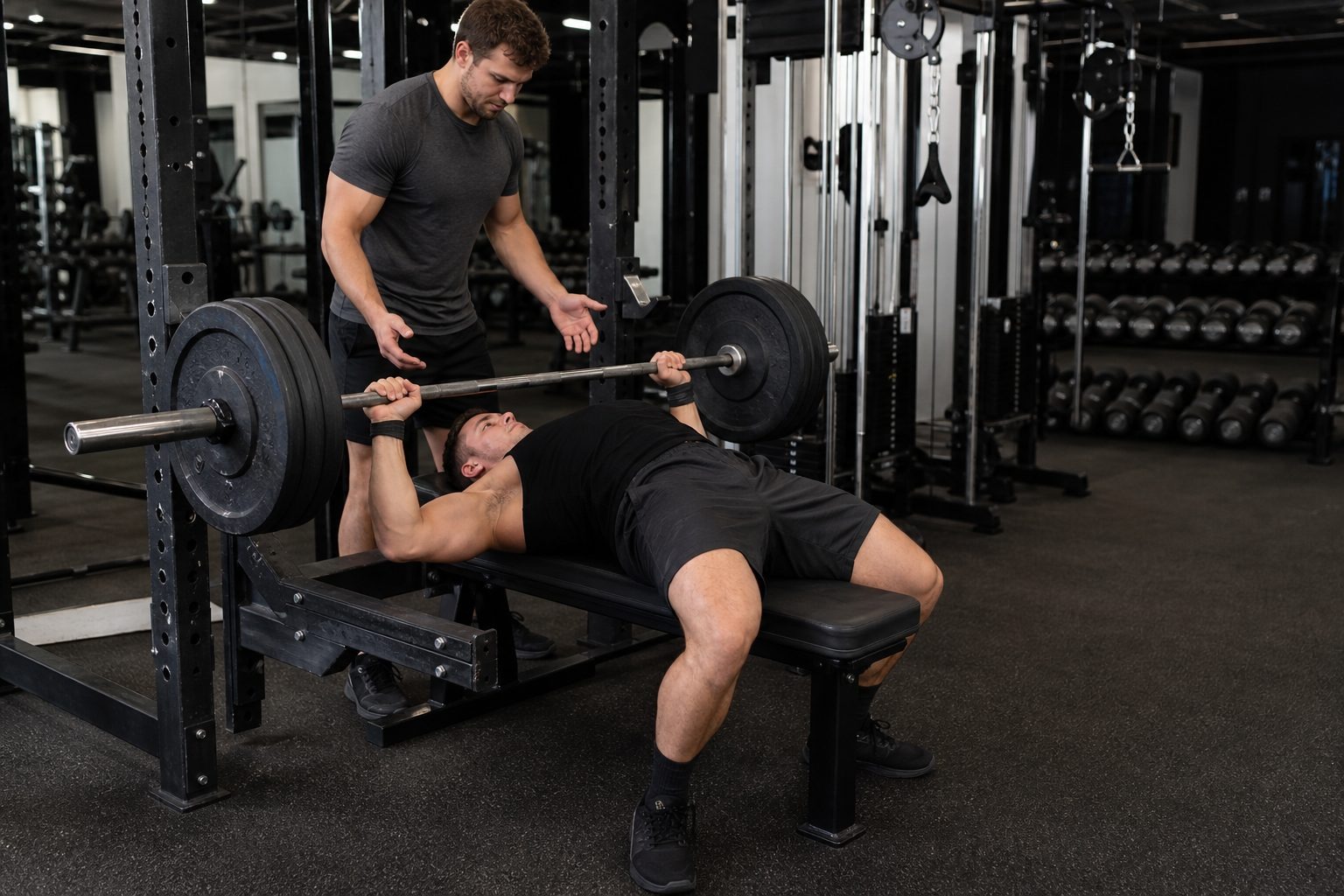
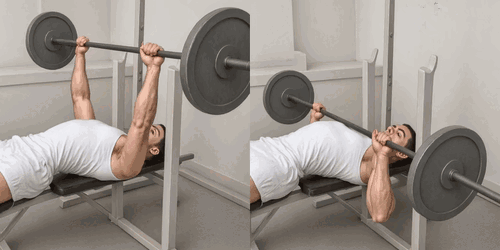
The bench press comes first because low-rep barbell work demands coordination, tight technique, and high force output. Doing it after several chest and shoulder exercises would reduce performance without creating an obvious benefit.
One hard set of three to five reps is enough for the strength-focused portion of this session. This is not a true maximum attempt. Finish the set when you could probably complete one more clean rep, but not two or three.
Before that working set, gradually increase the weight over several warm-up sets. As the bar gets heavier, reduce the reps so the warm-up prepares you without creating fatigue.
A practical sequence might look like this:
- Empty bar for 10–15 reps
- About 40% of your working weight for 6–8 reps
- About 60% for 4–5 reps
- About 75% for 2–3 reps
- About 85% for 1 rep
- Heavy working set for 3–5 reps
You may need fewer steps when using lighter loads and more steps when benching substantially heavier weights.
Follow heavy work with controlled chest volume
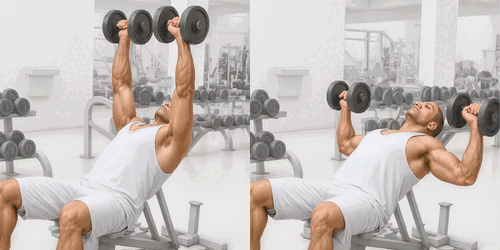
The incline dumbbell press adds chest volume with less emphasis on maximal loading. Its angle also shifts some work toward the upper chest and front delts.
Lower the dumbbells under control, reach a comfortable stretch, and press without bouncing out of the bottom. You do not need an exaggerated bench angle. A low-to-moderate incline usually keeps the exercise chest-dominant while still involving the shoulders.
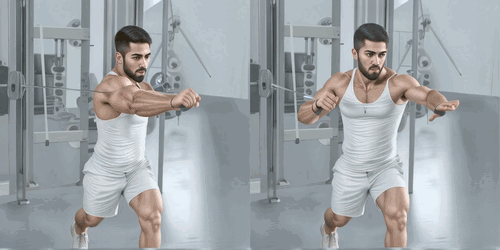
The single-arm cable chest press comes later. It lets you press across your torso and actively shorten the chest without needing another heavy compound movement. Keep your torso stable instead of rotating to move more weight.
Train the shoulders in different planes
Pressing already gives the front delts plenty of work. That is why a push workout does not need several nearly identical overhead presses or front raises.
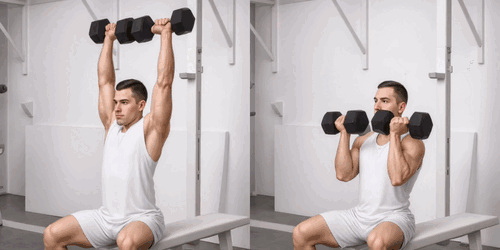
The Arnold press provides the main vertical pressing pattern. Brace your trunk, squeeze your glutes, and avoid turning each repetition into a standing incline press. Use a full range you can control without forcing an uncomfortable shoulder position.
Cable lateral raises then target the side delts more directly. Raise the arm out and slightly forward rather than straight in front of you. Lead with the elbow and stop before shrugging becomes the main movement.
Different arm paths can feel better for different lifters. The goal is not to find one supposedly perfect angle. It is to find a stable path that loads the shoulder, allows progression, and causes no joint pain.
Use two triceps positions
Your triceps work during every pressing exercise, but direct work is still useful when arm growth is a priority.
Pushdowns train the triceps with the upper arms near your sides. Keep your elbows relatively fixed and finish each repetition by extending them fully. Do not lean over the attachment and turn the movement into a full-body press.
Overhead extensions place the shoulder in a different position and load the triceps at a longer muscle length. Let the elbow bend deeply, keep the movement controlled, and avoid using excessive weight that pulls your shoulder out of position.
Combining these two patterns is more useful than performing several pushdown variations that all feel nearly identical.
Rest long enough to perform
Short rest periods are not automatically better for muscle growth. If your next set loses several reps because you rushed it, you are usually trading useful training for unnecessary fatigue.
Use these starting points:
- Heavy bench press: 3–5 minutes
- Incline and overhead presses: 2–3 minutes
- Cable chest and shoulder work: 60–120 seconds
- Direct triceps work: 60–120 seconds
Take longer when your breathing, grip, or concentration has not recovered. The goal is to make the target muscle work hard, not to turn the session into conditioning.
Optional stretching between sets
You can use a gentle 20–30 second chest stretch after your final chest exercise. Keep the intensity below the point of pain and stop if the shoulder joint feels irritated.
Research suggests that loaded or between-set stretching may have some hypertrophy value, but it is not the foundation of the workout. Progressive training, sufficient volume, and recovery matter far more.
Avoid hard stretching immediately before your heaviest press. If you include it, place it late in the session when your demanding chest work is already complete.
Common push-day mistakes
Taking the heavy set to absolute failure
A slow final rep is acceptable. A failed rep pinned to your chest is not a progression strategy.
Use safety arms or a reliable spotter for heavy barbell pressing. Keep roughly one rep in reserve and record the result honestly.
Doing too much pressing
Bench press, incline press, vertical press, machine press, dips, and multiple fly variations may look productive on paper. In practice, the later exercises often become low-quality volume.
Start with the prescribed sets. Add volume only when you are recovering well but no longer progressing.
Ignoring the side delts
Chest and overhead presses mainly train the chest, front delts, and triceps. They do not replace direct lateral raises if broader shoulders are one of your goals.
Chasing weight on isolation exercises
Adding weight only counts as progress when the target muscle still controls the movement. Shortening the range, swinging, or changing your torso angle can create the illusion of improvement.
Changing the workout every week
You cannot judge progression when the exercises and rep ranges constantly change. Keep the main structure for at least six to eight weeks unless an exercise causes pain or consistently feels unproductive.
How to progress the workout
Use double progression for most exercises.
For example, if the target is three sets of 8–10 reps:
- Keep the same weight until you can complete 10 reps on all three sets.
- Stay within the planned effort range and maintain your technique.
- Increase the weight by the smallest practical amount.
- Build back toward three sets of 10.
For the heavy bench set, increase the load after reaching five clean reps with approximately one rep still available. A small increase is enough. If you only reach three or four reps after adding weight, keep it there and build upward.
Track more than load. Reps, working sets, range of motion, and effort all matter. A technically cleaner set with the same weight can still represent progress.
How Gymfile helps
Gymfile lets you record sets, reps, weights, rest times, and exercise history in one place. That makes it easier to see whether your bench press is improving, whether your isolation work is actually progressing, and whether you are repeating the planned session consistently.
Log your warm-up sets separately from your working sets. Add a short note when technique changes, discomfort appears, or a set reaches failure. Those details make your training history far more useful than a list of weights alone.
Summary
A strong push day does not need endless pressing. Use one heavy horizontal press, controlled chest and shoulder work, direct side-delt training, and two complementary triceps positions.
Keep most sets close to failure without forcing every set to failure. Rest long enough, maintain consistent technique, and run the session for several weeks. The workout becomes effective when you can measure and repeat your progress—not when it simply leaves you exhausted.